Natural Light in Operating Rooms: Clinical, Human & Operational Benefits
Natural light is a proven contributor to health and well-being in healthcare environments. In operating room design, however, its role requires precision. When carefully controlled and integrated with standard surgical lighting, daylight can enhance team alertness, support cognitive performance during complex procedures, and contribute to more sustainable, efficient surgical suites. These performance factors ultimately support better patient outcomes.
Research from The Center for Health Design links access to natural light with improved circadian alignment, reduced stress, better mood, and stronger overall performance for patients and staff. While operating rooms function differently than inpatient rooms, the human performance benefits of daylight remain highly relevant.
Clinical Performance Benefits in the OR
Operating rooms demand sustained concentration, visual precision, and seamless teamwork. Even though surgical lighting remains the primary source for task illumination, ambient daylight can play a meaningful supporting role.
Exposure to natural light supports circadian rhythms, which influence alertness, hormone regulation, and cognitive function. For surgeons and clinical teams working long shifts or extended procedures, circadian support helps reduce fatigue and maintain focus. Research in occupational health and lighting science consistently demonstrates that daylight exposure improves alertness and reduces perceived fatigue.
Daylight has also been associated with reduced stress levels. In high-pressure surgical environments, lower stress levels support clearer decision-making and stronger communication among team members. While daylight does not directly illuminate the surgical field, it contributes to overall environmental quality and visual comfort within the room.
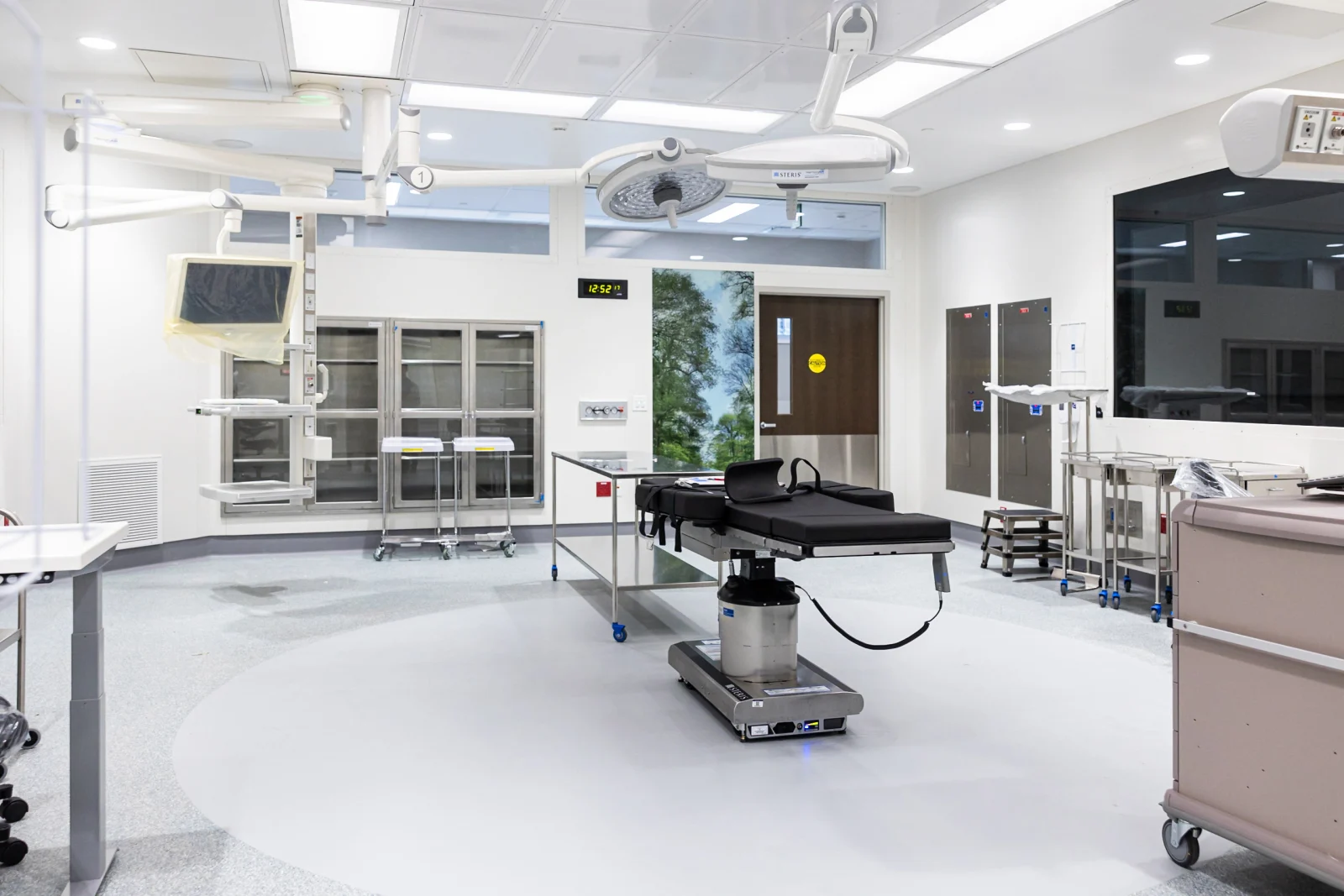
At the new Adena Orthopedic & Spine Institute in Chillicothe, Ohio, we introduced clerestory glazing into the operating rooms to capture these benefits without compromising performance. Rather than placing exterior windows directly in the OR, daylight filters in from an adjacent sterile corridor that includes exterior glazing. This strategy allows staff to remain visually connected to natural light throughout the day without compromising surgical lighting performance or temperature changes.
Because the daylight is indirect and diffused, it supports environmental quality without introducing glare or shadows to the OR. The surgical luminaires remain the primary light source for procedures, while daylight enhances overall room comfort. Blackout shades are installed on the corridor-side glazing, giving clinical teams full control when varying natural light is not desired during specific procedures.
Better-performing teams contribute to safer environments. When cognitive function and alertness are supported, patient outcomes benefit through improved clinical performance.
Psychological Benefits for Surgical Staff
Operating rooms can feel enclosed and disconnected from time of day. Over time, that lack of environmental variation can contribute to fatigue and burnout.
Access to daylight has been linked to improved mood, reduced emotional exhaustion, and higher workplace satisfaction across healthcare settings. For surgical teams who spend hours in procedural spaces, even indirect daylight can reduce feelings of confinement and improve morale.
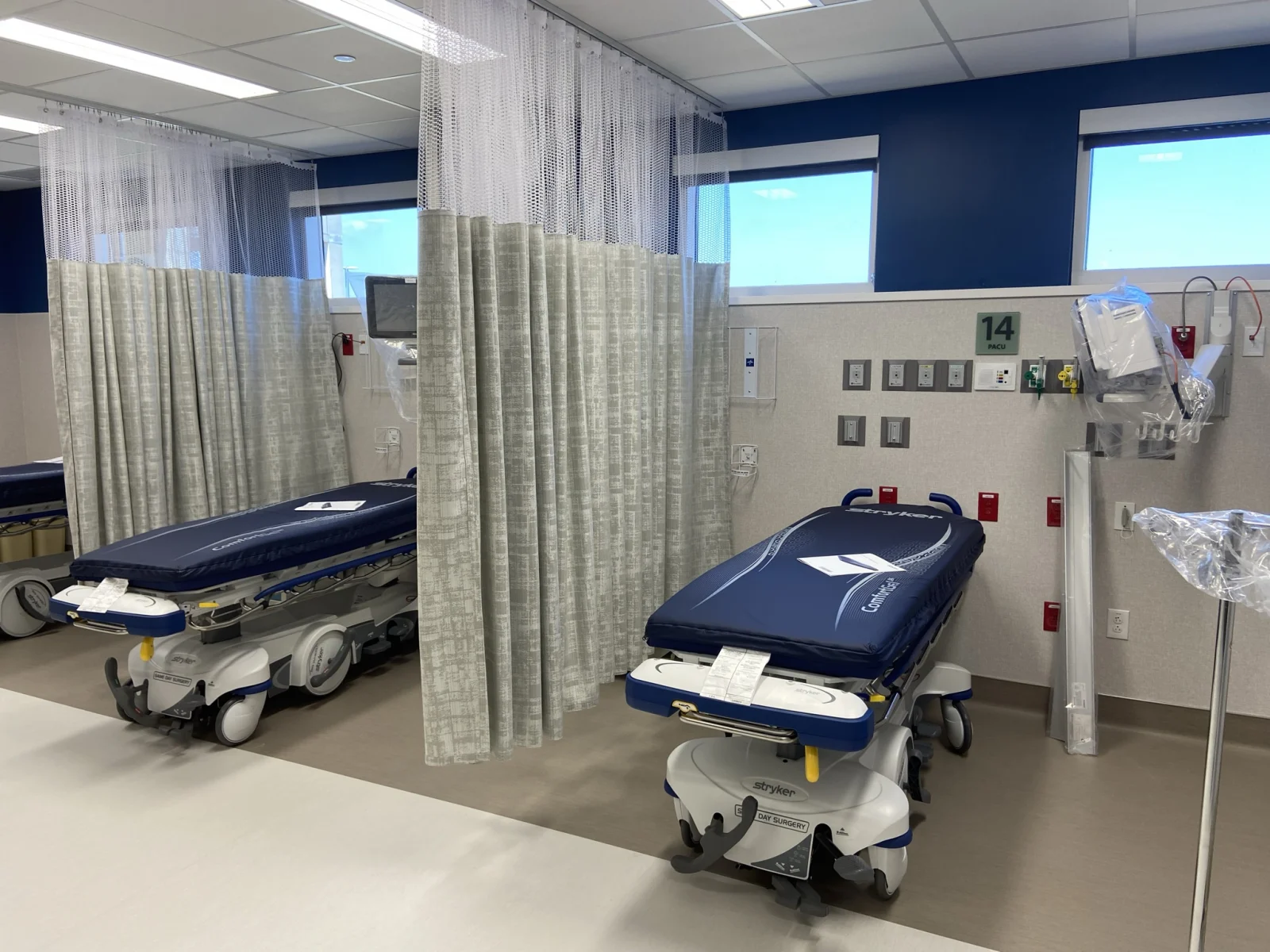
Although patients are under anesthesia during surgery, adjacent perioperative areas such as pre-op, induction, and recovery spaces can benefit significantly from daylight. Research shows that access to natural light in healthcare settings can reduce anxiety and improve overall perception of care. When surgical suites are planned holistically, daylight strategies can enhance both staff well-being and patient experience in connected spaces.
Operational and Environmental Advantages
Integrating natural light reduces reliance on electric ambient lighting during daytime hours. While a reduction of electric lighting within the operating room itself is typically neither practical nor advisable due to the precision required for surgical procedures, the principle holds true in adjacent prep, recovery, and support spaces. Studies indicate that optimized daylighting can reduce lighting-related energy consumption, in some cases by approximately 17%, lowering electricity demand and long-term operating costs. In facilities with extended hours, even partial reductions in lighting loads create measurable savings over time.
Health systems are also prioritizing energy efficiency and operational resilience as part of long-term capital planning. Thoughtful daylight integration supports these objectives while improving the quality of interior environments. In competitive markets, facilities that demonstrate both clinical excellence and responsible operational performance stand apart.
Critical Design Considerations for OR Daylighting
Daylight in an operating room must be deliberate. The goal is environmental support without compromising surgical precision, sterility, or lighting consistency.
Direct sunlight should never reach the surgical field. High clerestory glazing, diffused glass, and indirect daylighting strategies allow natural light to enter without creating glare or shadows. Temperature stability must be maintained through careful detailing of exterior assemblies or by introducing daylight through adjacent conditioned spaces, as demonstrated at Adena.
Infection control remains paramount. Glazing systems must be sealed, cleanable, and compliant with healthcare construction standards. Daylight should complement ambient lighting conditions, never compete with surgical luminaires.
When addressed early in design, daylight becomes an asset rather than a risk.
A Strategic Approach to Surgical Suite Design
Natural light does not replace surgical lighting or override sterile protocol. However, when thoughtfully integrated, it can:
- Support surgical team alertness and cognitive performance
- Contribute to staff well-being and long-term retention
- Enhance adjacent perioperative environments
- Reduce energy use and support sustainability goals
- Strengthen the overall performance of surgical facilities
For health systems, ambulatory surgery centers, and private surgical practices, operating room design is both a clinical and business decision. Spaces that support performance, efficiency, and staff well-being position organizations for long-term success.