How to Reposition Class B Office Buildings for Today’s Flight-to-Quality Market

Across downtowns, suburbs, and aging office parks, Class B office buildings from the 1980s and 1990s are struggling to compete in a market where tenants are more selective than ever. Vacancy is not always about location or square footage. More often, it is about perception.
Recent market data reinforces this shift. According to JLL, demand for top-tier office space continues to rise as companies prioritize amenities, sustainability, and overall workplace experience.
For brokers trying to lease space, municipalities working to revitalize office districts, and owners facing upcoming lease expirations, the question is no longer whether renovation is needed. The question is how to help stakeholders envision what is possible.
The transformation of a Class B office building into Sarnova’s headquarters in Dublin, Ohio offers a clear answer.
Why Many Class B Office Buildings Struggle in Today’s Market
Many Class B office buildings suffer from the same issues. Dated facades. Uninviting entries. Interiors that no longer reflect how people work today. These buildings often get overlooked, not because they are fundamentally flawed, but because they fail to tell a compelling story.
Brokers hear it every day:
- Tenants say they cannot see themselves there.
- Employees say the office gives them no reason to come in.
- Communities see stagnation instead of opportunity.
- The challenge is not just physical. It is perceptual.
A Case Study in Repositioning, Not Replacement
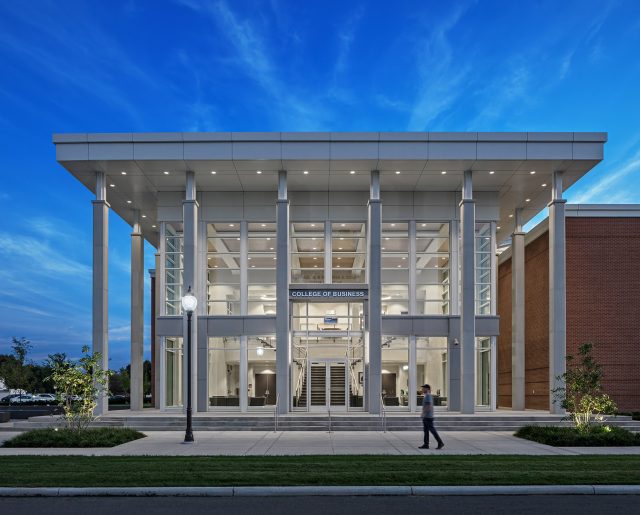
Sarnova chose a conventional 1980s brick office building for its new headquarters, opting to reposition the existing structure through renovation instead of pursuing new construction. That decision reshaped the building’s identity and performance, resulting in a complete repositioning of the asset.
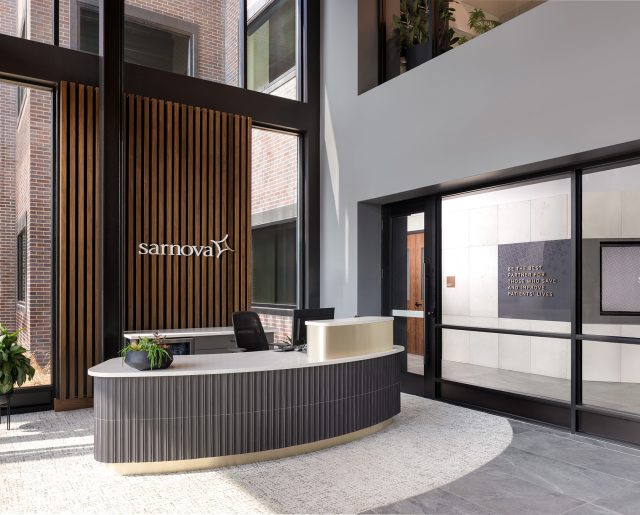
The exterior was reimagined with a new entry sequence, expanded facade, layered materials, and strong indoor-outdoor connections. The building now makes a confident first impression and signals investment and longevity to everyone who approaches it.
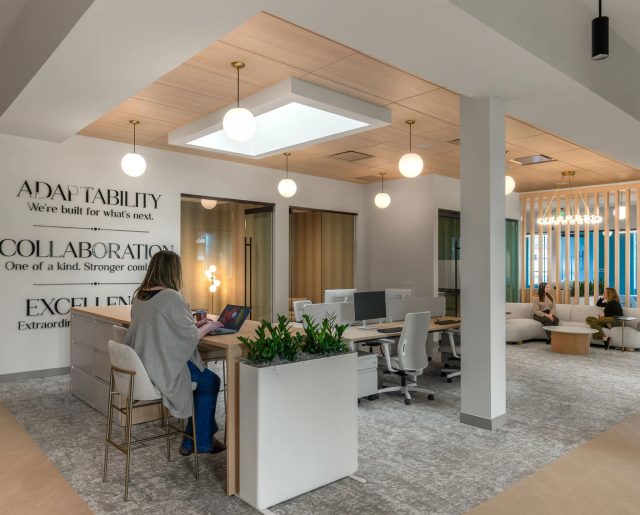
Inside, the renovation nearly gutted the existing interior to allow for a workplace guided by three core drivers: sustainability, employee wellbeing, and collaboration. This approach transformed not only how the building looks, but how it performs.
How Office Repositioning Changes the Leasing Conversation
In a competitive leasing environment, buildings that communicate value immediately outperform those that require explanation. CBRE’s 2024 Office Occupier Sentiment Survey found that 59% of companies relocating are doing so to upgrade to higher-quality space that better supports employee experience.
When potential tenants walk into a building, first impressions are formed in seconds. The entry experience, access to daylight, visible amenities, and sense of energy all shape perception before square footage or rent are discussed.
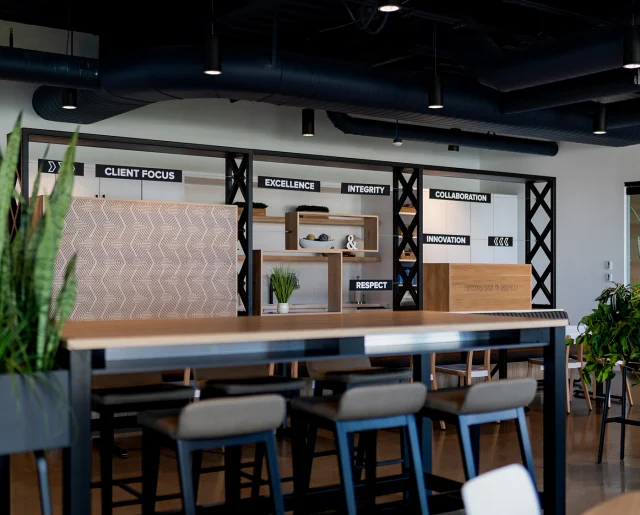
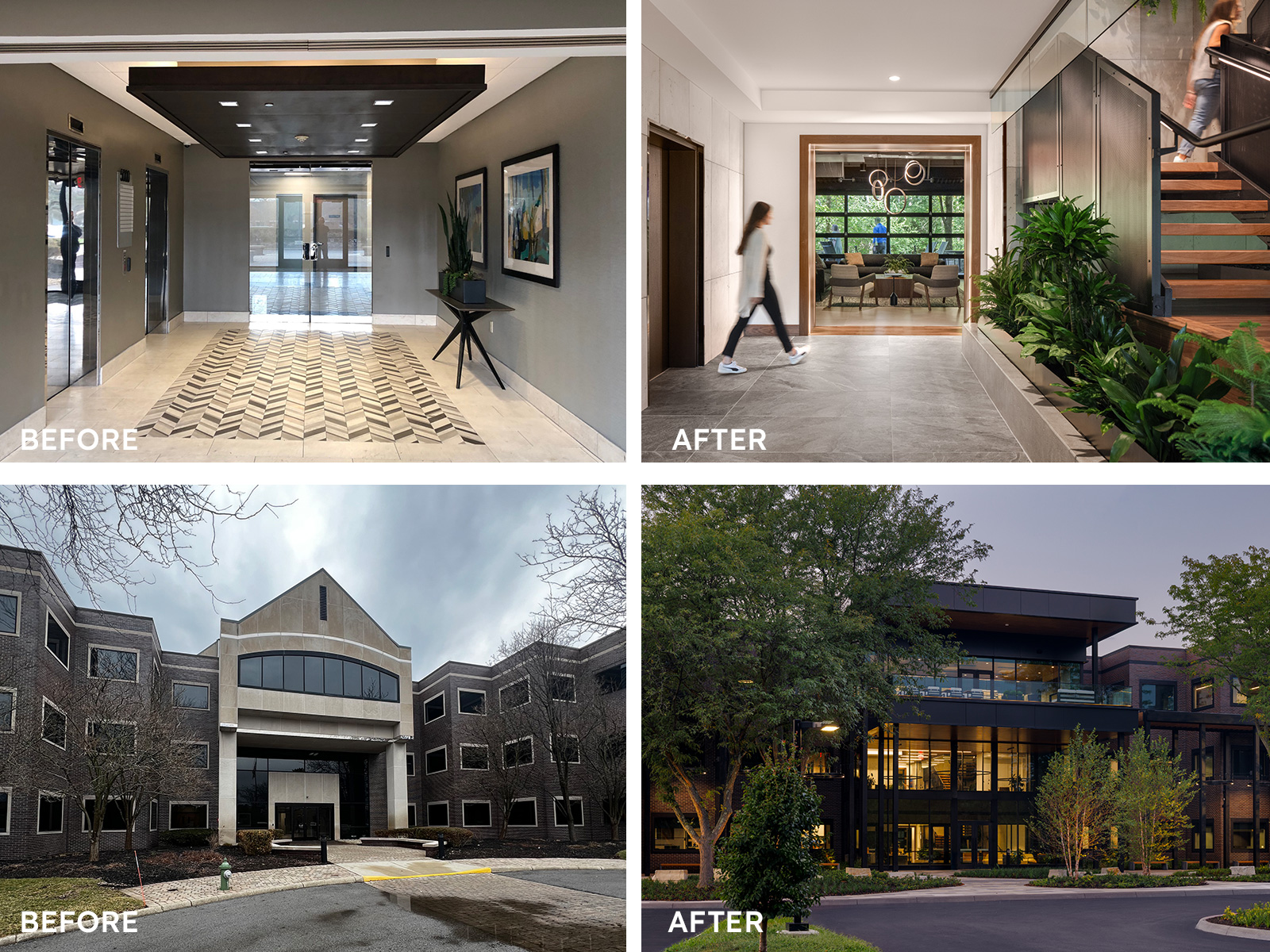
At Sarnova HQ, the design creates an immediate sense of connection. A dramatic entry leads to a central sightline running the length of the building. A rebuilt grand stair anchors movement and interaction across three floors. Amenities are not hidden. They are showcased.
For brokers, this kind of transformation changes the conversation. Instead of selling around limitations, the space becomes the differentiator. Before-and-after comparisons tell a powerful story, especially for tenants who struggle to visualize potential in outdated buildings.
Why Office Renovation Matters for Municipalities
Office vacancy impacts more than landlords. It affects surrounding retail, infrastructure investment, and community vitality.
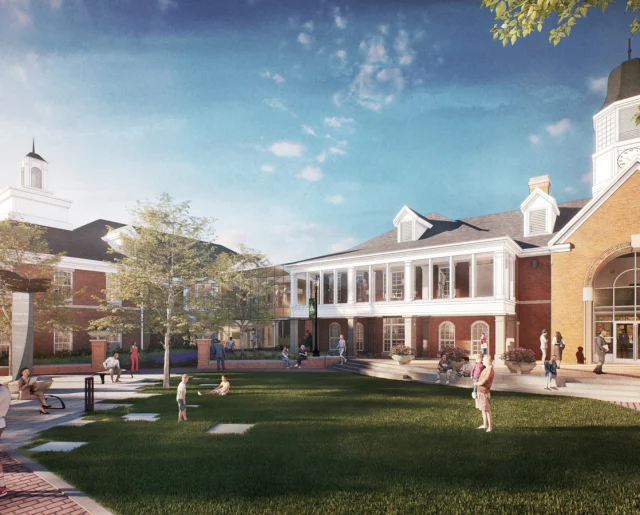
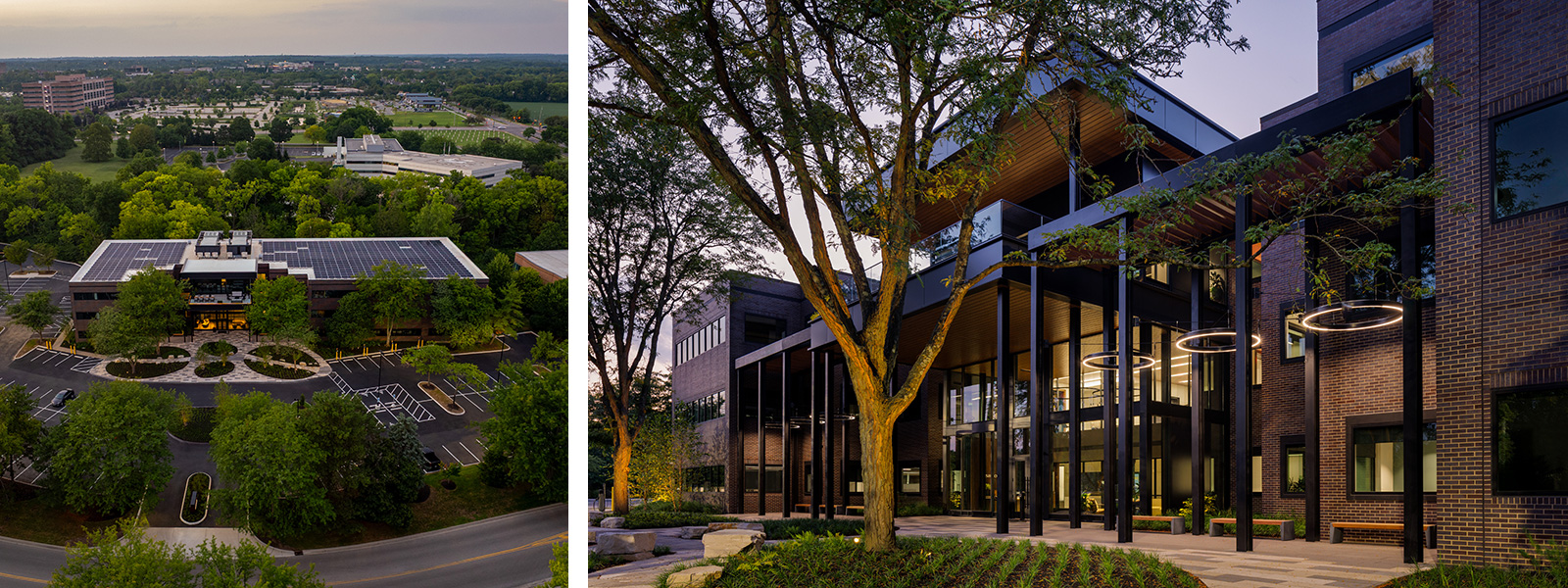
Sarnova’s renovation demonstrates how existing office buildings can be leveraged as catalysts for broader revitalization. Site improvements extend beyond the building itself to include landscape rework, walking paths, patios, EV parking, and rooftop solar. These moves extend the value of the project beyond the building itself and into the surrounding office park.
By reinvesting in existing assets, municipalities can encourage sustainability, reduce demolition waste, and signal confidence in their business districts. The project’s LEED Gold certification under v4.1 for major renovation reinforces that renovation can be both environmentally responsible and economically strategic.
Designing for Today’s Return-to-Office Expectations
Today’s tenants are not just looking for desks. They are looking for experiences that support culture, flexibility, and wellbeing. Research supports this approach, showing the overall environmental quality of a workplace has a direct impact on occupant satisfaction and perceived work performance.
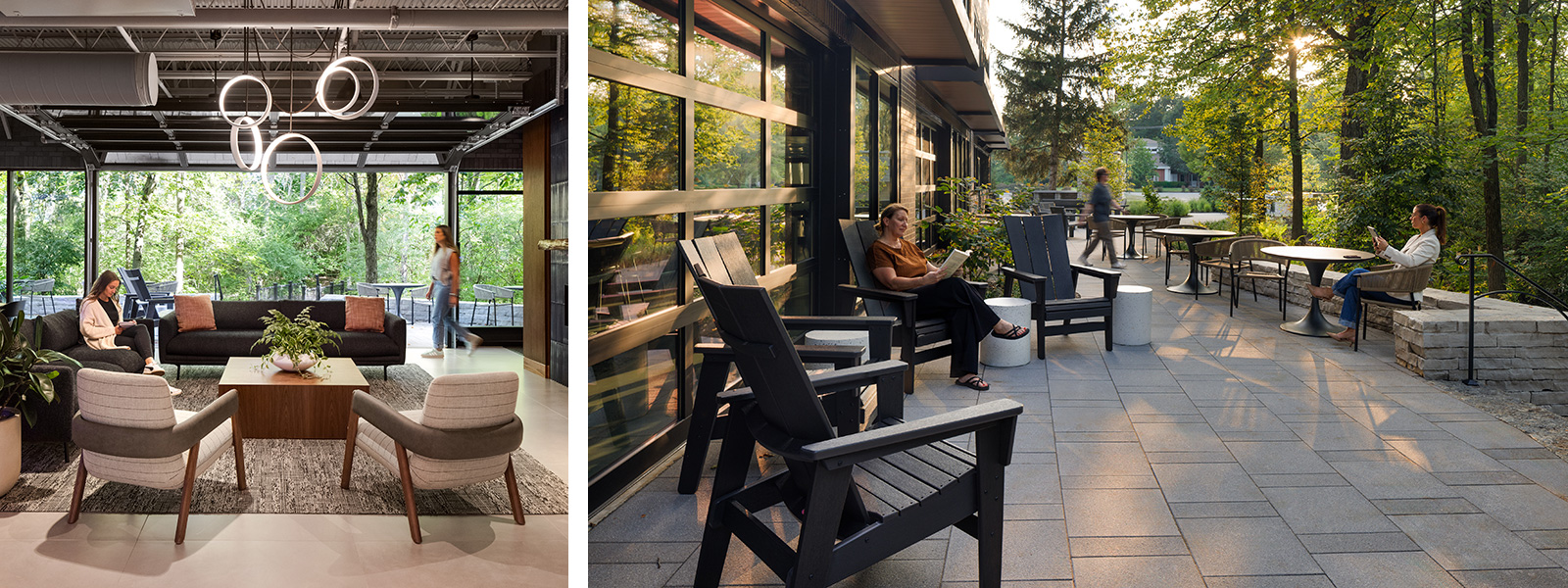
At Sarnova HQ, curated amenities such as the Buffalo Cafe, open collaboration zones, training spaces that flex for large gatherings, and outdoor work areas help make the office a destination. Wellness strategies are embedded into the daily experience, from increased access to daylight and floor-to-floor employee connectivity via a central open stair, to wellness-focused amenities like reservable desks with integrated walking pads, outdoor gathering spaces, and a new onsite walking path that encourages movement throughout the day.
This kind of design directly supports return-to-office goals. It also future-proofs the building by allowing spaces to adapt as organizational needs evolve.
The Takeaway: Repositioning Over Replacement
The smartest office investments today are not always new buildings. Often, they are the ones hiding in plain sight.
With the right vision, design strategy, and execution, Class B office buildings can be repositioned to compete with Class A spaces. They can attract tenants, support employees, and reinvigorate surrounding communities.
For brokers, municipalities, and building owners, the opportunity lies in helping people see what is possible. At MA Design, we believe transformation starts with designing differently and reimagining what already exists. We partner with owners, developers, and municipalities across the Midwest to reposition underperforming office assets through strategic renovation and experience-driven design. If you’re evaluating the future of a Class B office building, let’s talk about what’s possible.