Climate-Smart Design: Turning Climate Challenges Into Opportunities
Inspired by the renowned New York Climate Week, this year, MA Design is launching our own Climate Week. Since 2009, New York Climate Week has educated and engaged politicians, business leaders, government officials, academics, and innovators ahead of the international UNFCCC Conference of the Parties (COP). The week is focused around climate action and education, with over 900 events, activations, campaigns and engagement opportunities (Climate Week NYC 2025). It brings people together of all backgrounds to engage in dialogue around the important conversations happening around the topic of climate.
At MA, we’re dedicating this week to emphasizing the importance of Climate-Smart Design—even here in the Midwest, and in Ohio, where we are often viewed as a “Climate Haven”. While we might experience less severe effects of climate change compared to coastal cities, and other parts of the country, we are still experiencing our own challenges related to climate. For example, according to an article by the Ohio State University, “in 2024 alone, the state endured a record number of tornadoes, a historic drought in the southeast, and 35 days above 90 degrees [Fahrenheit] in Columbus.”
In Ohio, we are expected to experience more extreme heat, more severe storms, and more intense precipitation events. These events can cause strains on our buildings, communities and economies. These stresses will only increase as more data centers come online, with population increases and a power grid that can’t expand fast enough. This is emphasized early this summer by a report issued by the Mid-Ohio Regional Planning Commission (MORPC) shared data from PJM indicating that Ohio could begin facing energy insecurity in Ohio starting in 2027-2028. The result will be increased energy demand, which is expected to drive costs higher.
Amid rising energy insecurity and increasing climate risks, it’s critical to renew our focus on designing for resilience, energy efficiency, decarbonization, and occupant health and well-being with diversity, equity and inclusion at the forefront of every decision.
Climate-Smart Design
When we talk about climate-smart design, it encompasses all these elements: resilience, energy efficiency, decarbonization, occupant health and well-being, and diversity, equity, and inclusion. Climate-smart design covers all aspects of the built environment.
How can we design our built environment more effectively to be truly climate-smart and address each of these critical opportunities?
Resiliency
At its core, climate resiliency is about anticipating worst-case scenarios so that response and recovery can happen quickly and effectively. This mindset is essential as we look toward a future with increasing climate risks. Below are several strategies to help design with resiliency in mind:
Plan for Power Outages Due to Extreme Weather
- Identify which systems are critical for each project in the event of a power outage or natural disaster.
- Place those critical systems on reliable backup power sources.
- Integrate redundancy measures into building systems to ensure functionality during disruptions.
- Consider renewable energy systems.
Plan for Extreme Heat
- Designate spaces within your project that can remain cool and habitable during a power outage in periods of extreme heat.
- Consider the impact on building systems, exterior material selections, and thermal performance.
- Reduce the heat island effect by minimizing dark surfaces, using high-reflectance materials for roofs and hardscapes, and maximizing green space on the site.
- Minimize solar heat gain during summer months.
Plan for Increased Precipitation Events
- Whenever possible, avoid building in highly flood-prone areas.
- For projects in flood-prone locations, incorporate intentional design strategies—such as allowing specific exterior or lower-level spaces to flood safely or preventing water intrusion altogether by raising finish floor elevations above anticipated flood levels.
- Select durable, cleanable materials that can withstand prolonged water exposure—from interior finishes to insulation types—to ensure long-term resilience.

Energy-Efficiency
Energy efficiency as a concept isn’t new—it has been a cornerstone of sustainable design for decades. However, in light of today’s challenges, it’s becoming imperative to renew our focus on efficiency. With energy costs projected to rise and climate events increasingly straining building systems, making our built environment as efficient as possible offers a significant cost-benefit and long-term savings.
Designing for energy efficiency goes beyond choosing LED lighting (though that remains essential). It requires a holistic approach and thoughtful strategies, including the following steps:
- Right-Size Buildings: Evaluate whether programs or functions can share spaces. A smaller, more efficient footprint is a critical first step in reducing a building’s energy use.
- Optimize the Building Envelope: Select the highest insulation values the project budget allows (at a minimum, meeting code requirements). Carefully plan air-sealing details, as infiltration can significantly reduce performance.
- Select High-Performing MEP Systems: Choose the most efficient mechanical, electrical, and plumbing systems feasible within the budget.
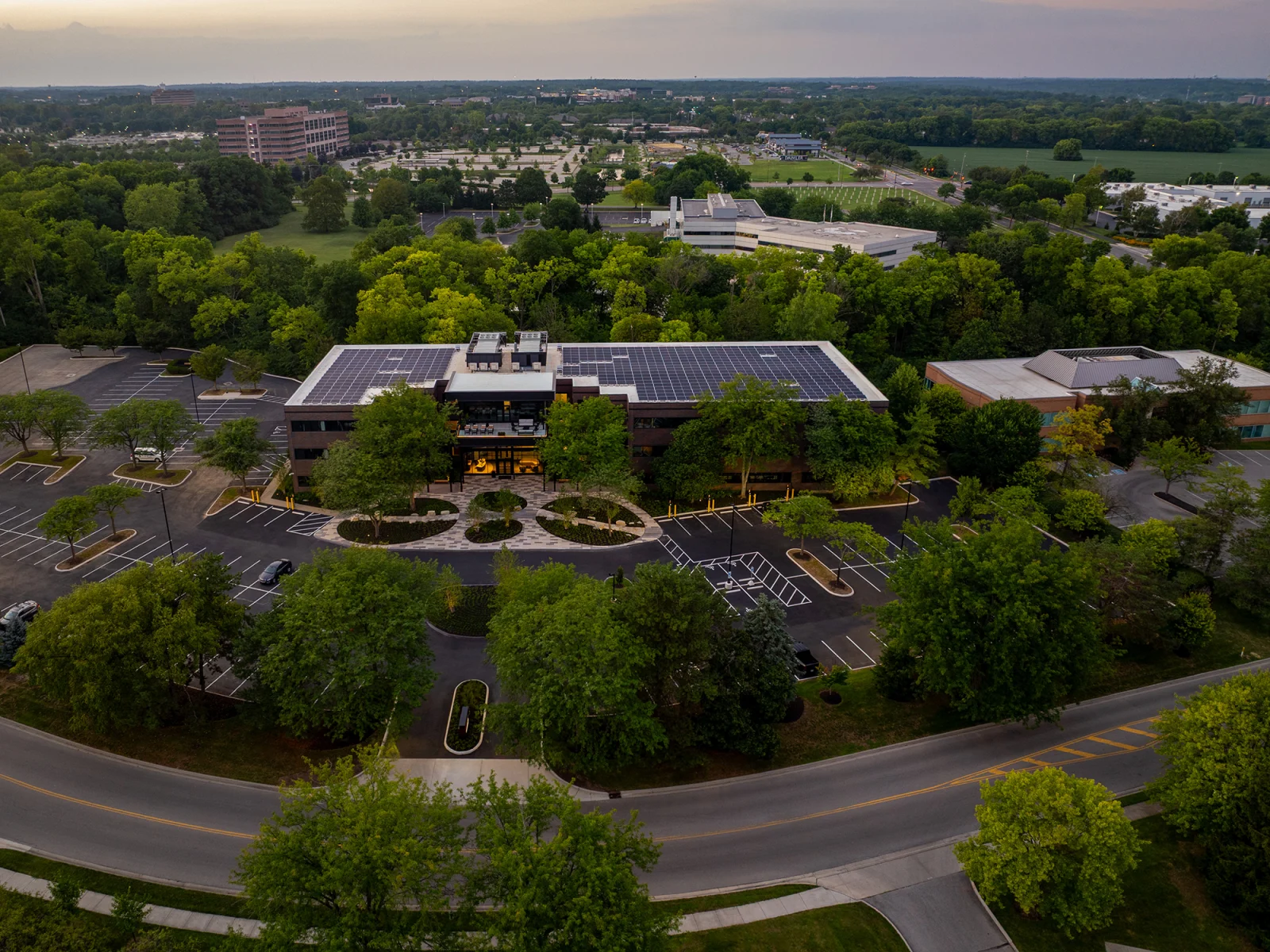
- Integrate Renewable Energy Sources: After optimizing the building program, envelope, and systems, explore renewable energy options to cover any remaining energy load.
Decarbonization
Decarbonization has become a major focus in recent years, emphasizing the need to reduce carbon emissions associated with both operational and embodied carbon in our projects.
Operational Carbon – Reducing operational carbon involves:
- Electrifying building systems,
- Designing highly efficient buildings,
- Integrating renewable energy sources.
As electrification efforts increase, electricity demand on the grid can temporarily spike. This makes it critical to design efficient buildings with the smallest possible energy footprint, while also planning for—or incorporating from day one—renewable energy solutions to reduce grid strain.
Embodied Carbon – Reducing embodied carbon means:
- Selecting low-carbon building materials – Choose materials that require less energy to produce, are locally sourced, or are manufactured using renewable energy. Prioritize products with Environmental Product Declarations (EPDs) and Life Cycle Analysis (LCA) data to make informed decisions.
- Optimizing the structural system – Minimize the use of carbon-intensive materials such as concrete, steel, and aluminum wherever feasible. When these materials are necessary, specify lower-carbon alternatives that meet the project’s design and engineering requirements.

Occupant Health + Well-being
While resiliency, efficiency, and decarbonization are critical components of climate-smart design, we can’t overlook the impact our decisions have on the health and well-being of building occupants. Designing holistically means thoughtfully considering how spaces support the people who use them.
From an occupant health perspective, climate-smart design includes strategies such as:
- Indoor Air Quality – With wildfires becoming more frequent—and their smoke traveling hundreds of miles—it’s essential to ensure buildings are prepared for poor air quality events. Extreme heat can also reduce outdoor air quality, leading to air quality warnings. In these situations, evaluating and optimizing filtration systems to manage outdoor air and pollutants is crucial.
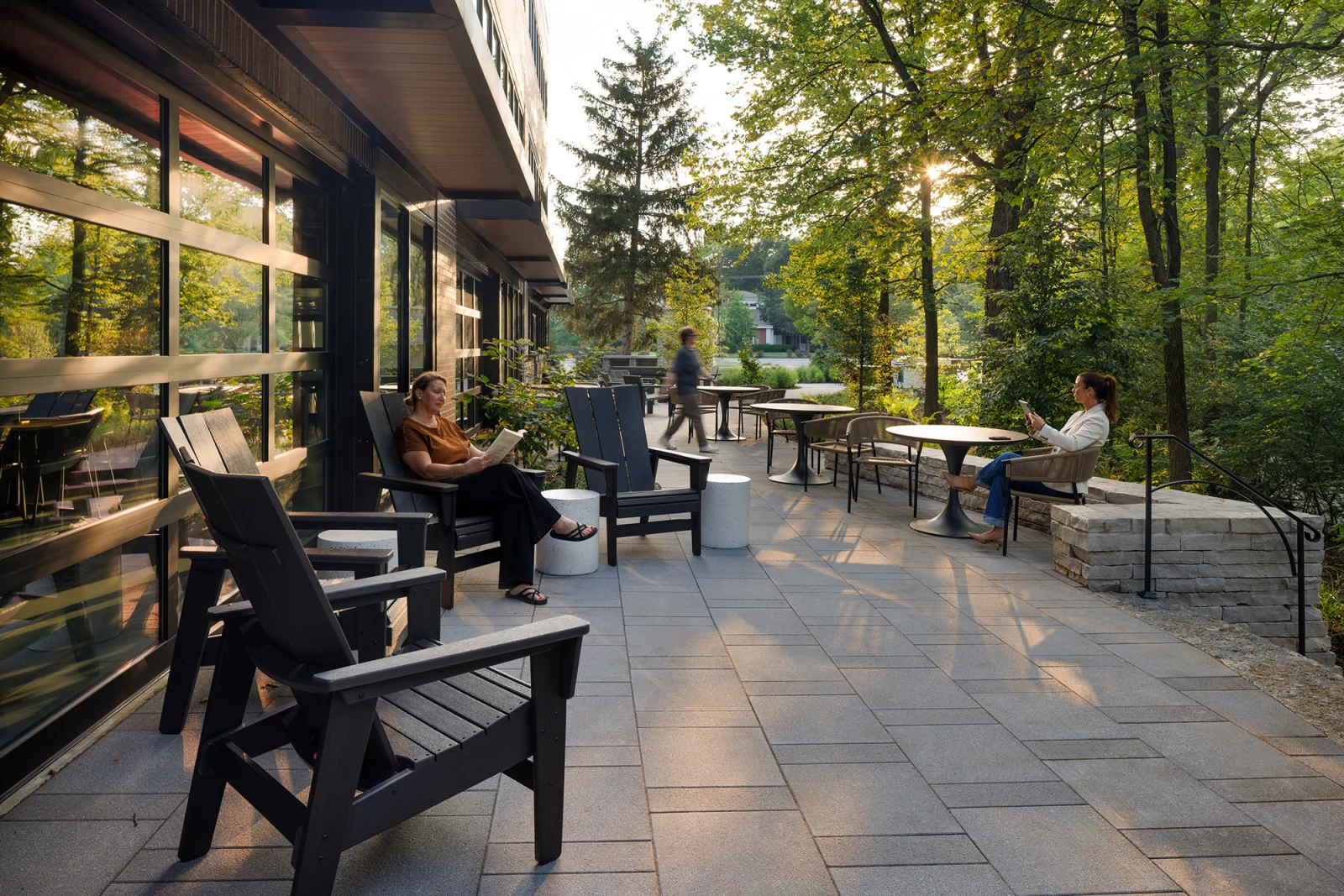
- Spaces for Respite and Connection to Nature – As climate change and natural disasters increasingly affect communities, providing spaces for mental restoration is vital. Incorporating biophilic design elements—such as natural light, natural materials, greenery, and views of nature—can create calming environments that reduce stress and support overall well-being.
- Material Selection – Carefully select interior materials that both minimize carbon emissions and support a healthy indoor environment. Prioritize products with material ingredient transparency, such as Health Product Declarations (HPDs) or Declare labels, and choose options with available Environmental Product Declarations (EPDs) and Life Cycle Assessments (LCAs). Whenever possible, consider locally sourced, salvaged, or reused materials as sustainable alternatives.
Diversity, Equity and Inclusion
Thoughtful and intentional climate-smart design requires inviting a diverse range of stakeholders to the table. Engage community members and user groups early in the process, and carefully consider how design strategies will impact both the community and its various stakeholders. Prioritize inclusive design and accessibility principles to ensure solutions serve everyone effectively.
Call to Action
As we design buildings meant to stand the test of time, we must plan for increasing climate risks and rising energy costs while remaining mindful of occupant health and advancing diversity, equity, and inclusion. It’s up to all of us to reflect on our own practices—identifying small, incremental changes we can make to design more climate-smart solutions. Beyond that, we must engage with our communities and partner organizations, working collectively toward a shared goal: a safer, healthier, more equitable, and more resilient future for everyone.