3 Ways Environmental Graphics Support Your Brand and Operations
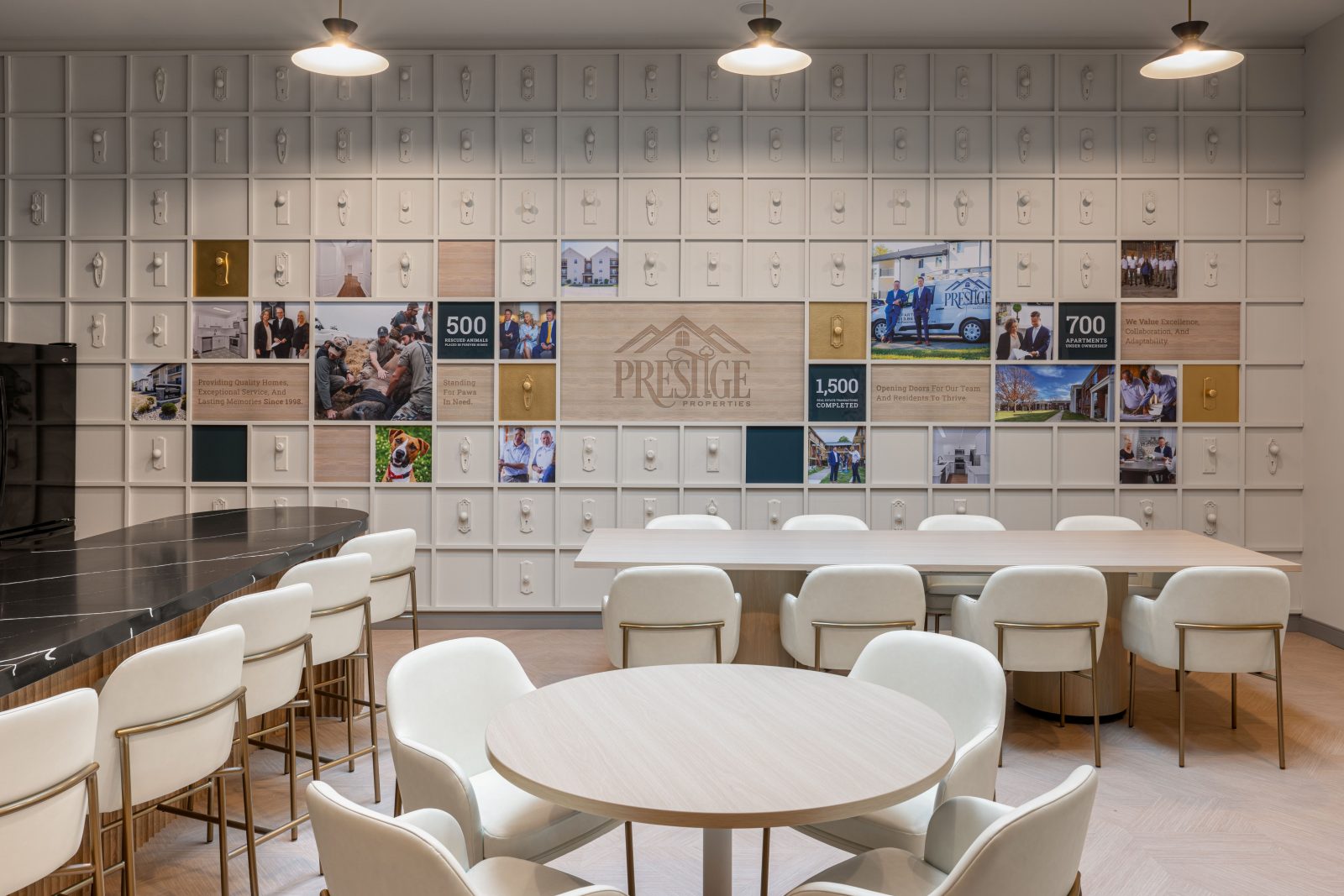
You’ve invested in a workplace that supports your people and represents your organization, but is your space working as hard as it could be?
Environmental graphics are more than a finishing touch. When thoughtfully integrated into workplace design, they can guide employees and visitors, reinforce your brand and culture, and make everyday interactions with your space more intuitive.
The result is a workplace that doesn’t just look good, it works better. People spend less time figuring out where to go or how to use the space and more time focused on the work and connections happening within it.
Here are three ways environmental graphics can deliver value for your organization.
1. Make Your Workplace Easier to Navigate and Use
Think about the last time you walked into an unfamiliar office. Did you immediately know where to check in, where to go next or which spaces were meant for you or did you have to stop and ask?
Environmental graphics can make the experience more intuitive by providing information where people need it, helping employees and visitors move through the space with greater confidence.
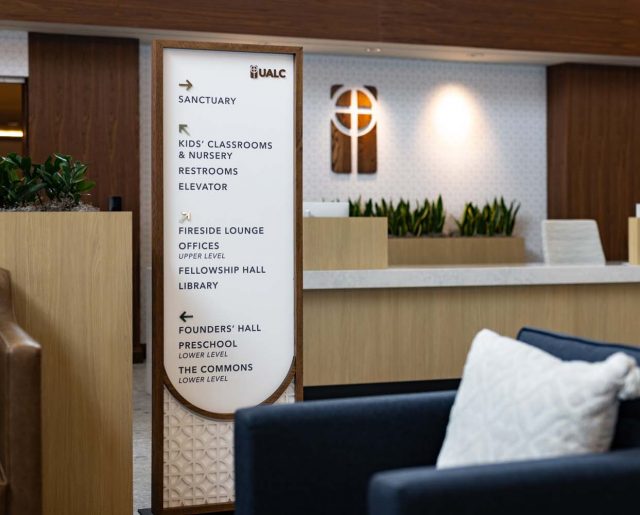
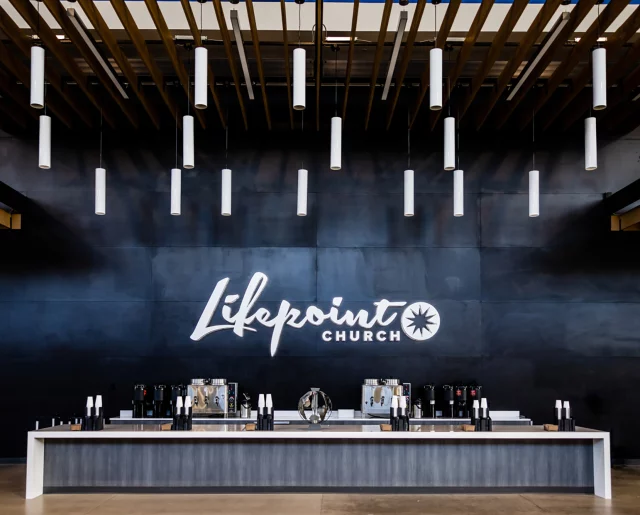
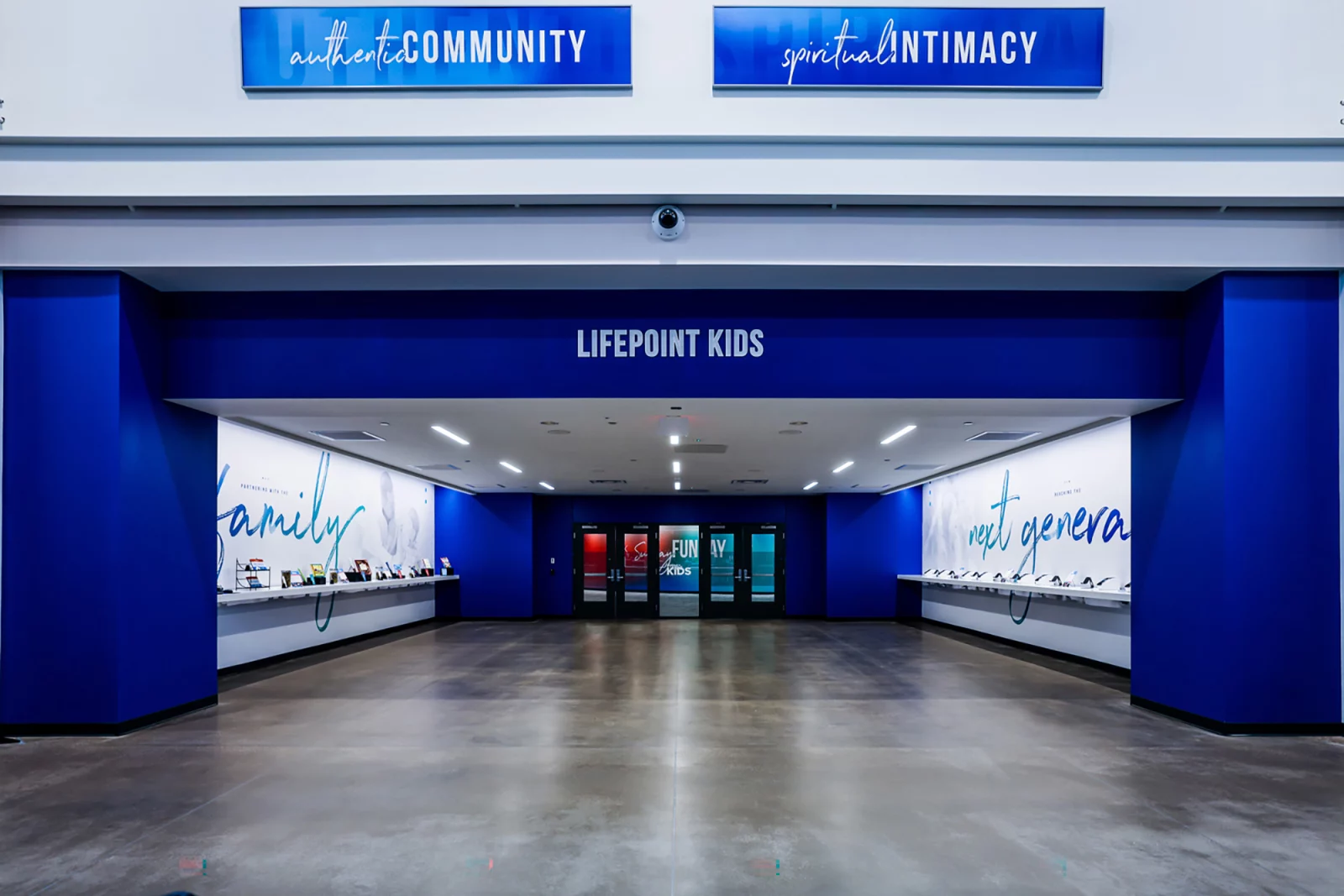
Effective wayfinding goes beyond directional signage. Through color, typography, symbols, imagery and other design elements, environmental graphics can create clear hierarchies for destinations and departments, making it easier to understand where you are and where you need to go. At LifePoint Church, experiential design gives different areas distinct identities, helping people intuitively navigate the space and recognize their destination. In the workplace, this sam approach can help define different zones, communicating which areas are intended for quiet focus, social interaction, collaboration or shared resources.
This clarity is especially valuable in flexible and hybrid workplaces, where employees may be less familiar with their surroundings and visitors have a limited amount of time to understand the space. When the workplace communicates clearly, people can spend less time figuring out where to go or how a space should be used.
Those small moments add up. Reducing uncertainty can mean fewer questions, fewer interruptions for employees and a smoother experience for everyone moving through the workplace.
The operational value? Smoother visitor flow, fewer disruptions and a workplace that’s easier for employees and visitors to navigate and use.
2. Reinforce Your Brand and Culture Every Day
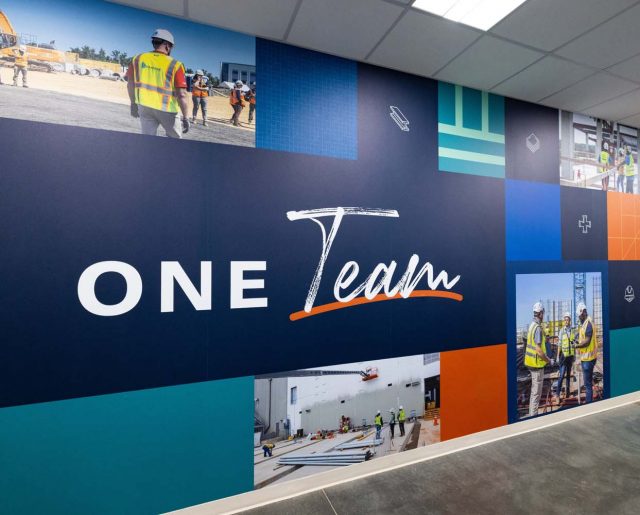
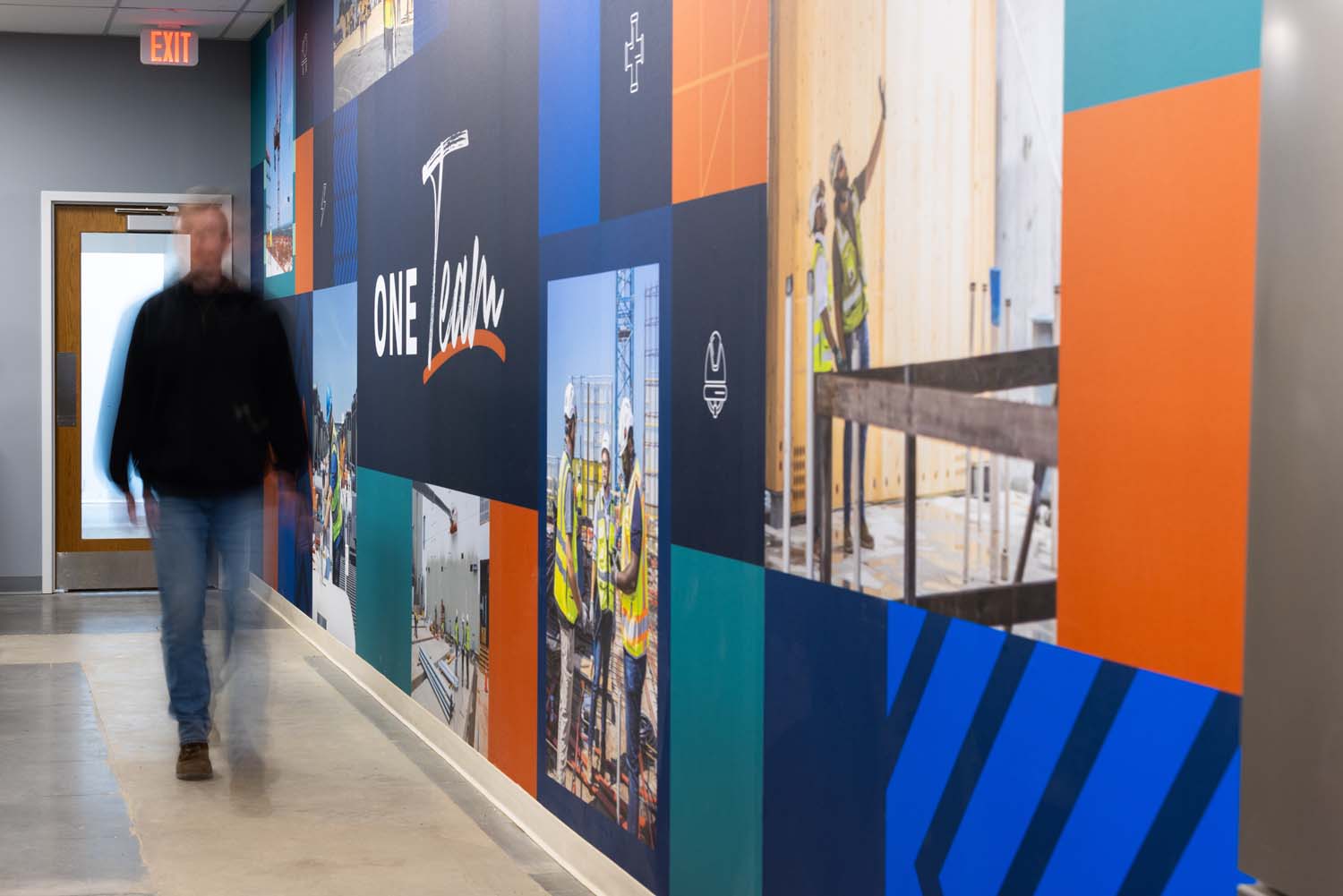
Your workplace is one of the most tangible expressions of your brand and culture. Environmental graphics can bring both to life, turning the ideas your company values into something employees and visitors can see and experience every day.
Culture statements don’t have the same impact when they live only in presentations or HR materials. When culture is reflected in the environment, it becomes something people experience repeatedly, often without even realizing it.
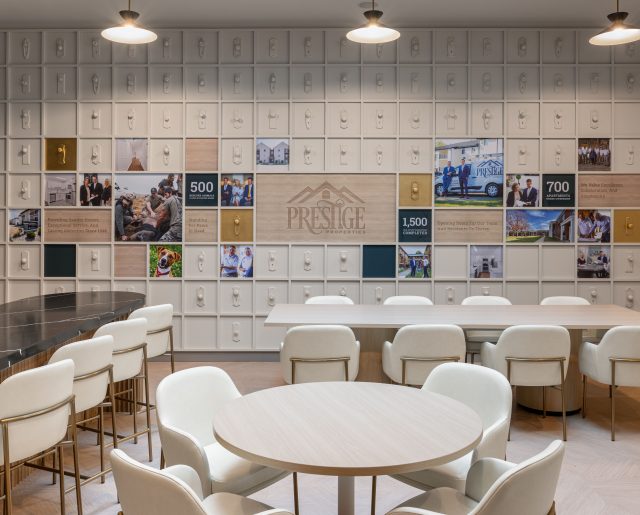
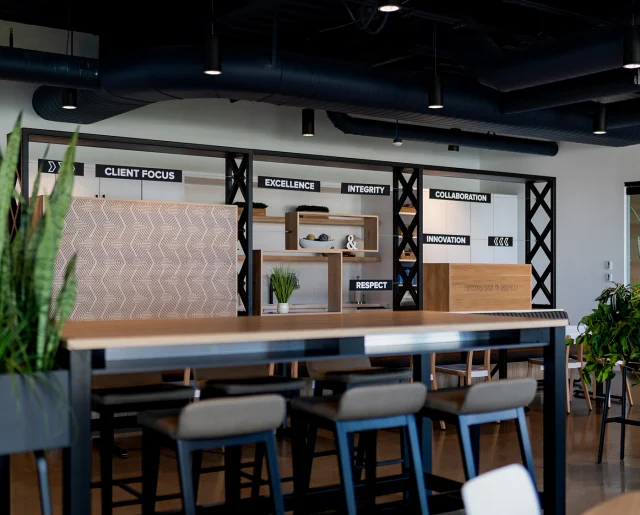
Environmental graphics can translate your mission and values into something tangible and visible. Through storytelling, imagery, recognition, and pleasantly unexpected details, they can communicate your organization’s tone, personality and standards while creating a stronger connection to your employer brand.
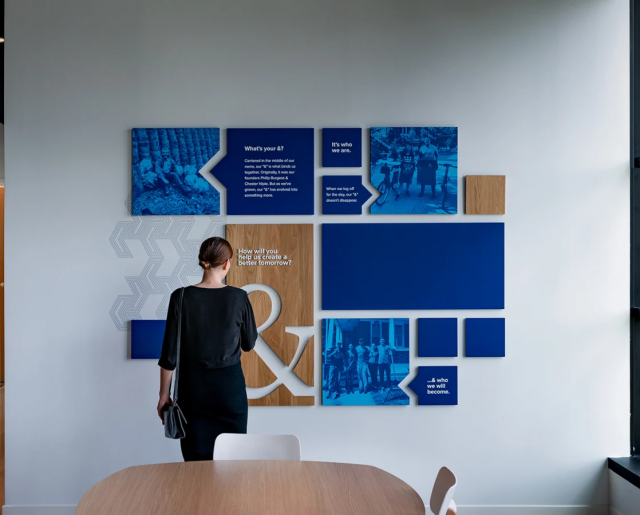
That might mean a history installation that connects employees to milestones that shaped the company like we did at Danis’ Columbus Office; recognition graphics that celebrate the people behind the work, as we created for HAWA, or product and project displays that make your organization’s impact visible, like those incorporated into Simpson Stong-Tie’s recent expansion in Columbus. These moments can build pride and belonging while helping employees see how they are part of the larger story.
They also shape how clients, recruits and other visitors experience your organization. Rather than simply telling people what your company values, the environment can demonstrate those values, creating a more authentic and consistent brand experience throughout the workplace.
The brand value? A workplace that feels intentional, consistent and connected to who your company is—not generic or purely functional.
The operational value? A workplace that does more than express who you are. It helps people understand how the organization works, reinforces the behaviors that move it forward, and makes information, impact and expectations more visible throughout the employee experience.
3. Reduce Everyday Friction and Support How People Work
Throughout the workday, employees make countless small decisions about how to use their environment. Where should I go? Is this a quiet area or a collaboration zone? Where can I find shared resources? Individually, these decisions take only seconds, but together they can create unnecessary cognitive load.
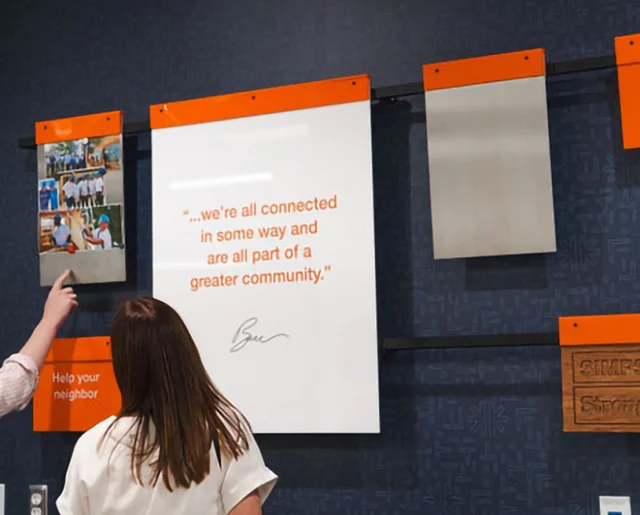
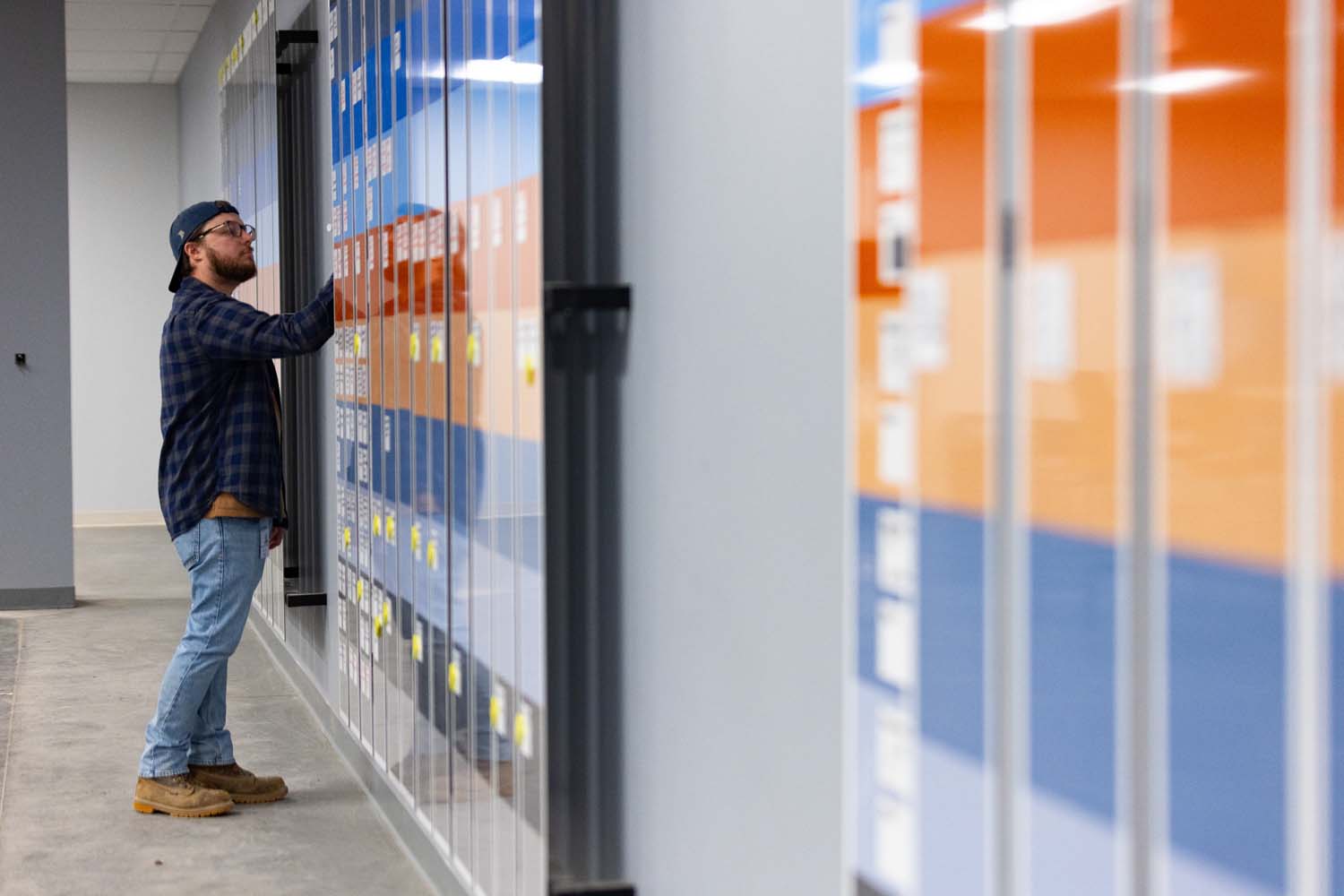
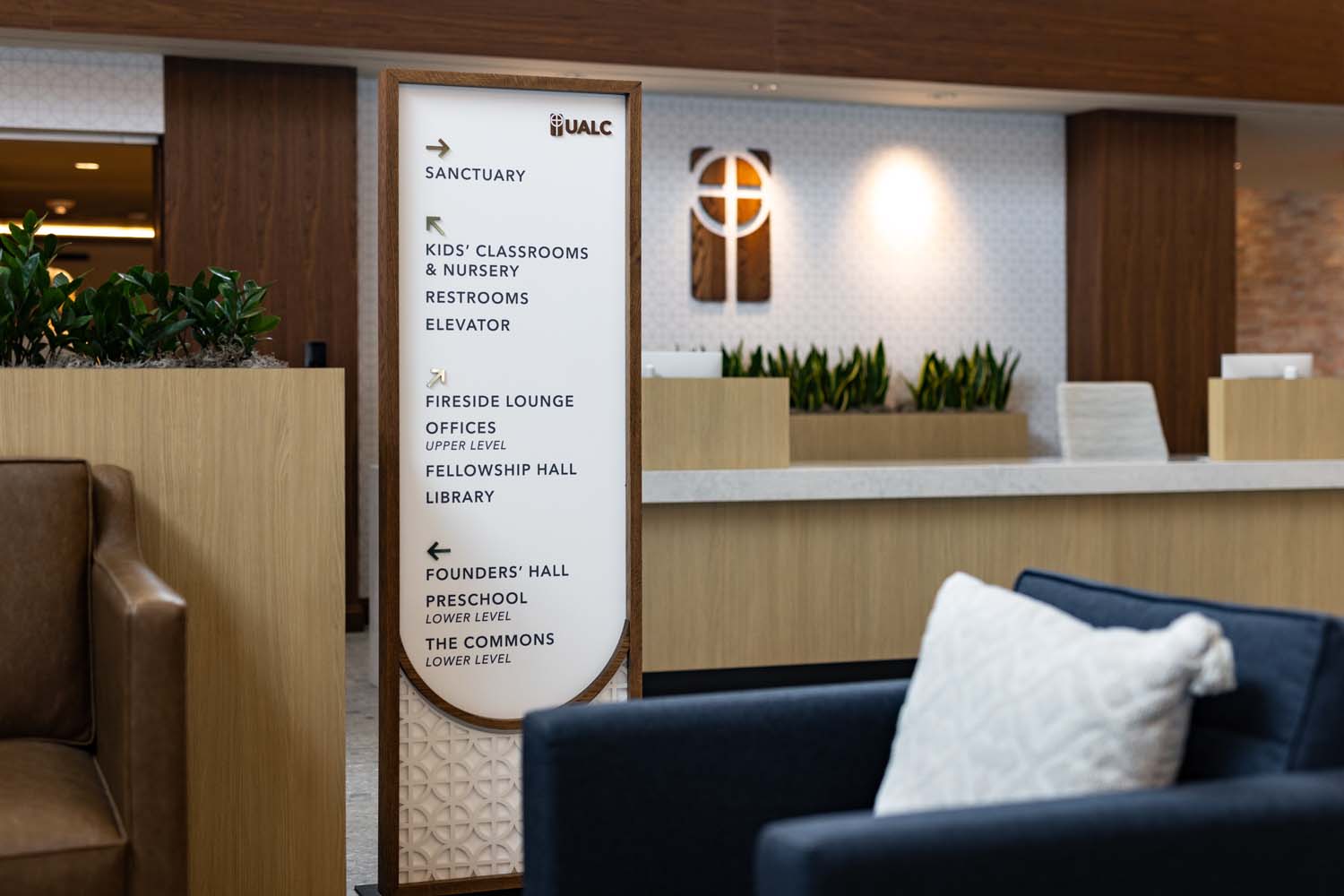
Environmental graphics can reduce that burden by making the workplace more self-explanatory. Providing the right information at the right moment removes ambiguity, supports faster decision-making and helps employees navigate their day with greater independence. At UALC’s Lytham Road campus, experiential design elements communicate the church’s culture, provide wayfinding while also supporting the day-to-day needs of staff through flexible, interchangeable displays. These elements can be easily updated as needs change while maintaining the overall design intent and goals for the space.
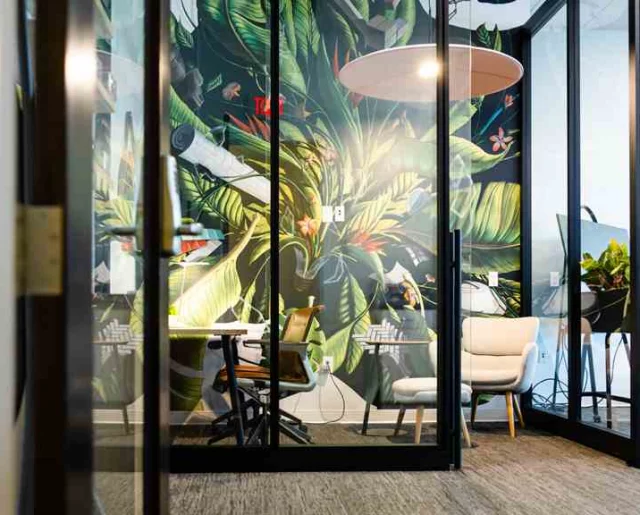
Visual cues can distinguish focused work areas from social or collaborative spaces, identify shared amenities and resources, or give different floors and departments recognizable identities. Instead of repeatedly stopping to interpret signage or ask questions, employees can more quickly understand where they are, what’s available and how a space is intended to be used.
Consistency is also important, particularly for organizations with multiple floors, offices or locations. A cohesive environmental graphics strategy can create familiar cues across the workplace, helping employees know what to expect while still allowing individual spaces to have their own identity.
This becomes even more valuable as companies grow, teams shift and hybrid work changes how frequently employees use the office. Clear environmental cues can help people adapt to new destinations and workplace patterns without relying on additional emails, instructions or management. Sometimes, the space itself can provide the answer.
The performance value? Fewer micro-frustrations, smoother routines and a workplace that helps people stay focused and productive with less day-to-day friction.
When Brand and Operations Work Together
The strongest environmental graphics don’t ask you to choose between a memorable brand experience and a functional workplace. They do both.
A wayfinding system can guide visitors while reinforcing your visual identity. A department identifier can orient employees while celebrating the work happening there. A client-facing installation can tell your company’s story while creating a natural conversation starter during a tour. These are opportunities for experiential design to become part of your workplace strategy, not simply an aesthetic layer.
At MA Design, we look at the full experience: Who is using the space? What do they need to know? What should they understand about your organization? And where along their journey can design have the greatest impact?
Answering those questions helps identify opportunities where experiential design can solve multiple challenges at once. It also shifts the conversation away from filling empty walls and toward choosing the moments that matter most.
Sometimes that means a bold installation that becomes a memorable part of the visitor experience. Other times, it’s a subtle visual cue that helps someone navigate without consciously thinking about it. The best environmental graphics often work quietly, making a workplace feel easier, clearer and more connected to the organization it represents.
For companies planning a new workplace, renovation, headquarters relocation or brand refresh, bringing experiential design into the conversation early creates opportunities to integrate storytelling, wayfinding, brand identity and functionality into one cohesive experience.
The question isn’t, “Where can we put graphics?”
It’s, “Where can the environment do more for our people and our business?”
See How We Can Help
Ready to make your workplace work harder for your organization? Let’s uncover where environmental graphics can strengthen your brand, simplify the workplace experience, and support your employees and visitors every day.
Reach out to Alicia Orlando to explore how our Experiential Design team can turn your workplace into a more intuitive, memorable, and distinctly branded experience.