The Midwest Shift to Luxury Apartments: What Developers Need to Know
Across the Midwest, a noticeable shift is taking shape in the multifamily market, one that many developers are already beginning to explore. Luxury apartments are not just appealing to young professionals anymore. A growing segment of renters, particularly retirees, empty nesters, seasonal residents, and financially secure individuals, is driving demand for a new kind of product: high-end, low-maintenance living that feels like home.
We’re seeing this shift firsthand through conversations with developers, property management teams, and prospective residents. Many of these renters are choosing apartments not because they have to, but because they want the convenience, flexibility, and lifestyle that luxury multifamily communities can provide.
For developers, this trend presents a compelling opportunity. Luxury rental rates can help proformas in ways traditional multifamily often cannot. But success in this space is not just about higher rents. It’s about understanding what these renters value and creating an experience that feels more like a condo or boutique hotel than a traditional apartment community.
So what does “luxury” actually mean to today’s renter? And how can developers position their projects to meet that expectation?
A New Renter Profile Is Driving Demand
What’s driving this trend isn’t simply a preference for luxury finishes or premium amenities. It’s a shift in who is choosing to rent. Behind this trend is a renter profile that many developers weren’t targeting a decade ago.
Developers we are working with are increasingly designing for residents such as:
- Retirees who split their time between cities
- Empty nesters downsizing from single-family homes or condominiums
- Professionals with location flexibility post-COVID
- High-income renters who prefer convenience over ownership
Many of these individuals are choosing to rent not out of necessity, but by design.
Rising condo association fees, special assessments, and the burden of maintenance and unexpected repairs are pushing even affluent homeowners to reconsider ownership. At the same time, remote and hybrid work arrangements have given many people greater flexibility in where and how they live, allowing them to spend only part of the year or several days a week in a particular city.
The result is growing demand for a “lock-and-leave” lifestyle that offers the comforts of home without the maintenance, upkeep, unexpected spends, and long-term commitments that come with ownership.
Why Luxury Apartments Make Financial Sense
From a development standpoint, this shift can be highly advantageous.
Luxury units command higher rents, which can:
- Offset rising construction costs
- Support structured parking and premium site locations
- Justify investment in higher-end materials and amenities
- Living in or adjacent to the urban core
The economics are helping drive interest in luxury multifamily development. Construction costs remain elevated, financing conditions remain challenging, and many developers are looking for product types that can support stronger rental rates without dramatically changing their financial models.
Luxury apartment rental rates close that gap. But higher rents alone don’t guarantee success. Today’s renters have elevated expectations. They’re comparing your building not just to other apartments, but to condos, resort hotels , and other luxury residential options.
These residents are often willing to pay for convenience, quality finishes, premium locations, and services that simplify daily life. They expect value beyond the unit itself, evaluating everything from the arrival experience and amenity package to the level of service available after move-in.
To compete, developers need to think beyond traditional multifamily design and create a living experience that feels distinctly different from the rest of the residential market.
Designing Luxury Apartments That Feel Like Home
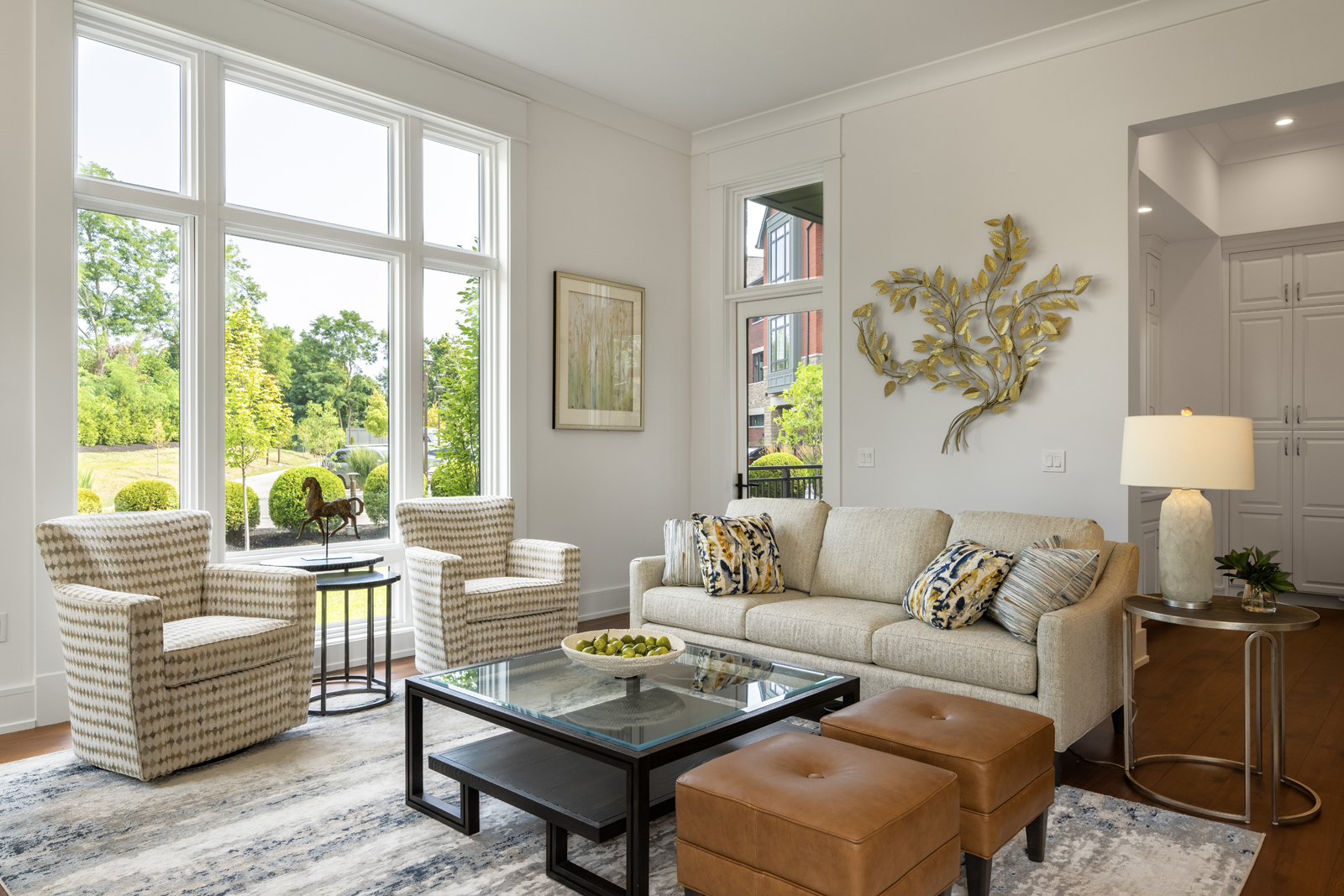
A consistent theme we’re hearing from both developers and renters is the desire for “condo-quality” apartments.
This doesn’t necessarily mean increasing square footage. In fact, many successful projects are doing the opposite by designing smaller units that feel larger, more functional, and more refined.
Key design strategies include:
Maximizing Every Square Inch
One of the biggest misconceptions about luxury apartments is that they have to be large. In reality, many successful luxury multifamily projects are finding ways to deliver a premium experience within a more efficient footprint.
The difference comes in the thoughtful planning. Luxury renters are often less focused on the total square footage and more focused on how they see themselves in the space day to day. Does the kitchen support entertaining and cooking? Is there enough storage? Does the layout feel open? Are everyday functions easy and intuitive?
Design decisions that help maximize every inch include:
- Thoughtful kitchen layouts that prioritize usability
- Large islands instead of peninsulas to open up space
- Stacked washer/dryer units to reduce footprint
- Built-in storage and upgraded closet systems
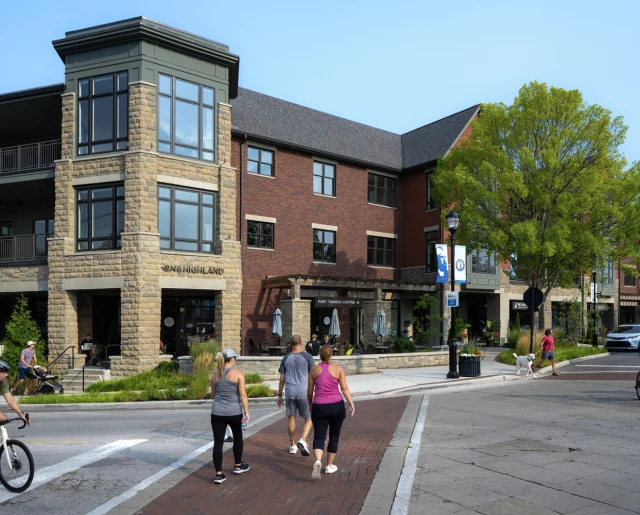
These choices may seem small on their own, but together they change how a unit feels and functions. When every square foot works harder, a smaller apartment can still feel refined, comfortable, and highly livable. The overall result is a custom feel and elevated experience like at One Highland in Ft. Thomas, KY.
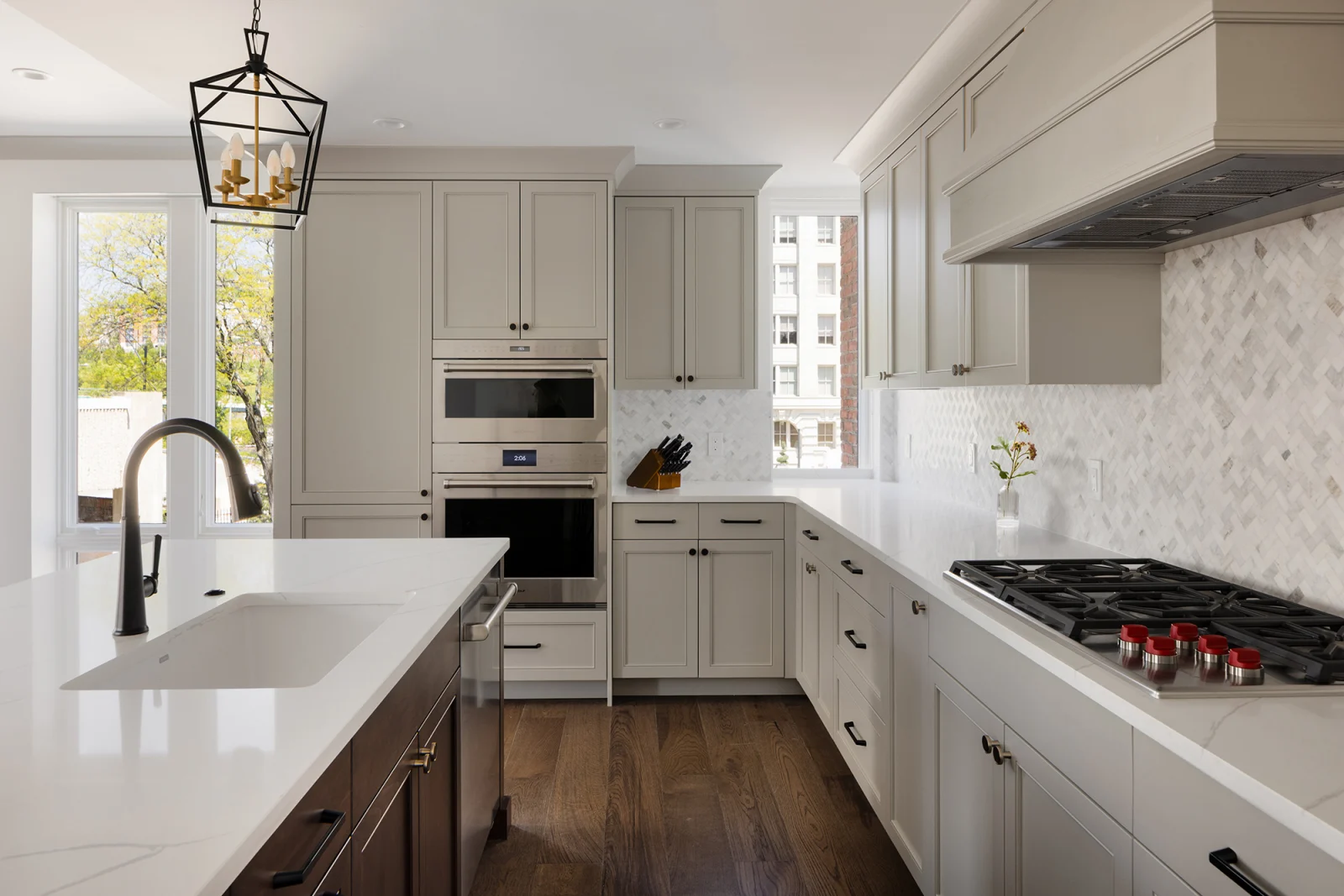
Elevating Kitchens and Bathrooms
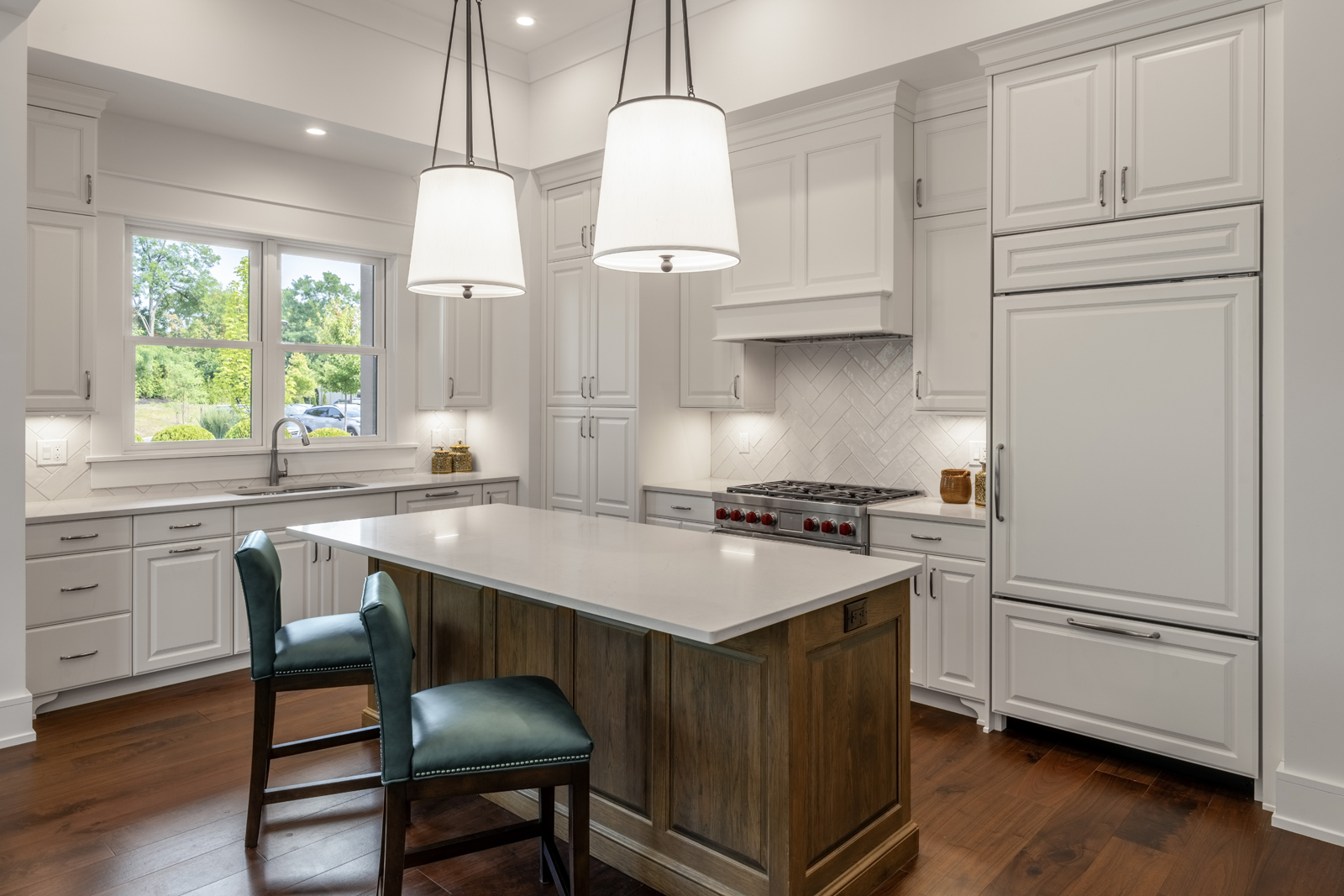
For these renter profiles, kitchens and bathrooms carry outsized importance.
We’re seeing increased demand for:
- Higher-end appliance packages
- Integrated wine storage and flexible refrigeration drawers
- Durable, residential-quality materials
- Clean, modern detailing that feels custom rather than standard
These spaces are no longer simply functional. They’re part of the overall living experience and often become key deciding factors for prospective residents.
Creating a True Residential Feel
Luxury renters are highly attuned to material quality. Many are moving from custom homes or high-end condominiums and immediately recognize the difference between finishes selected for cost efficiency and those selected for long-term quality.
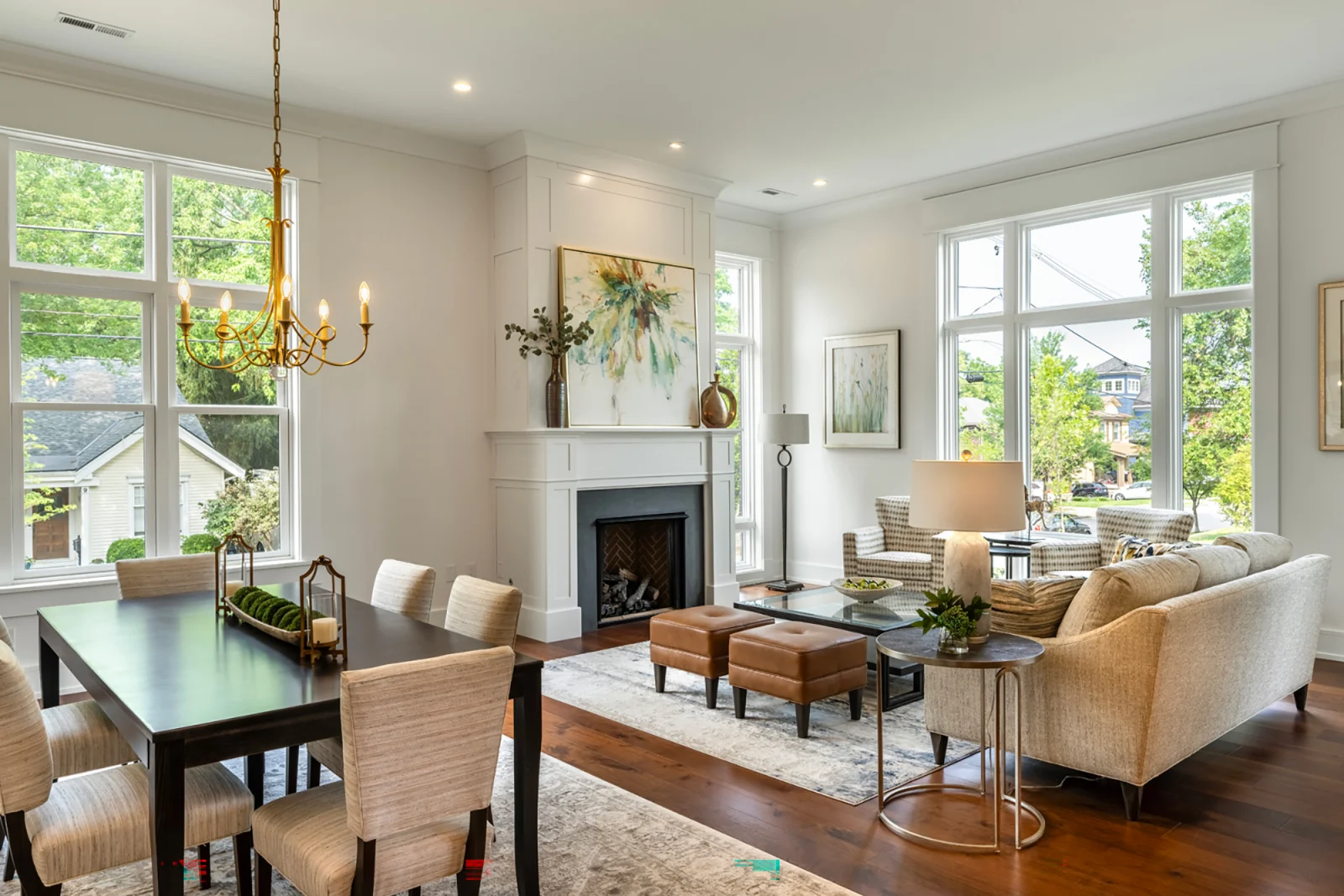
Creating a residential feel often comes down to thoughtful choices in flooring, lighting, millwork, acoustics, and detailing that make a space feel curated rather than standardized.
Design strategies often include:
- Real wood or tiled flooring (or high-quality alternatives with enhanced durability)
- Warmer, more tactile materials
- Layered lighting strategies
- Additional acoustical control from unit to unit
The goal is to create an environment that adaptive and feels like home rather than a conventional apartment.
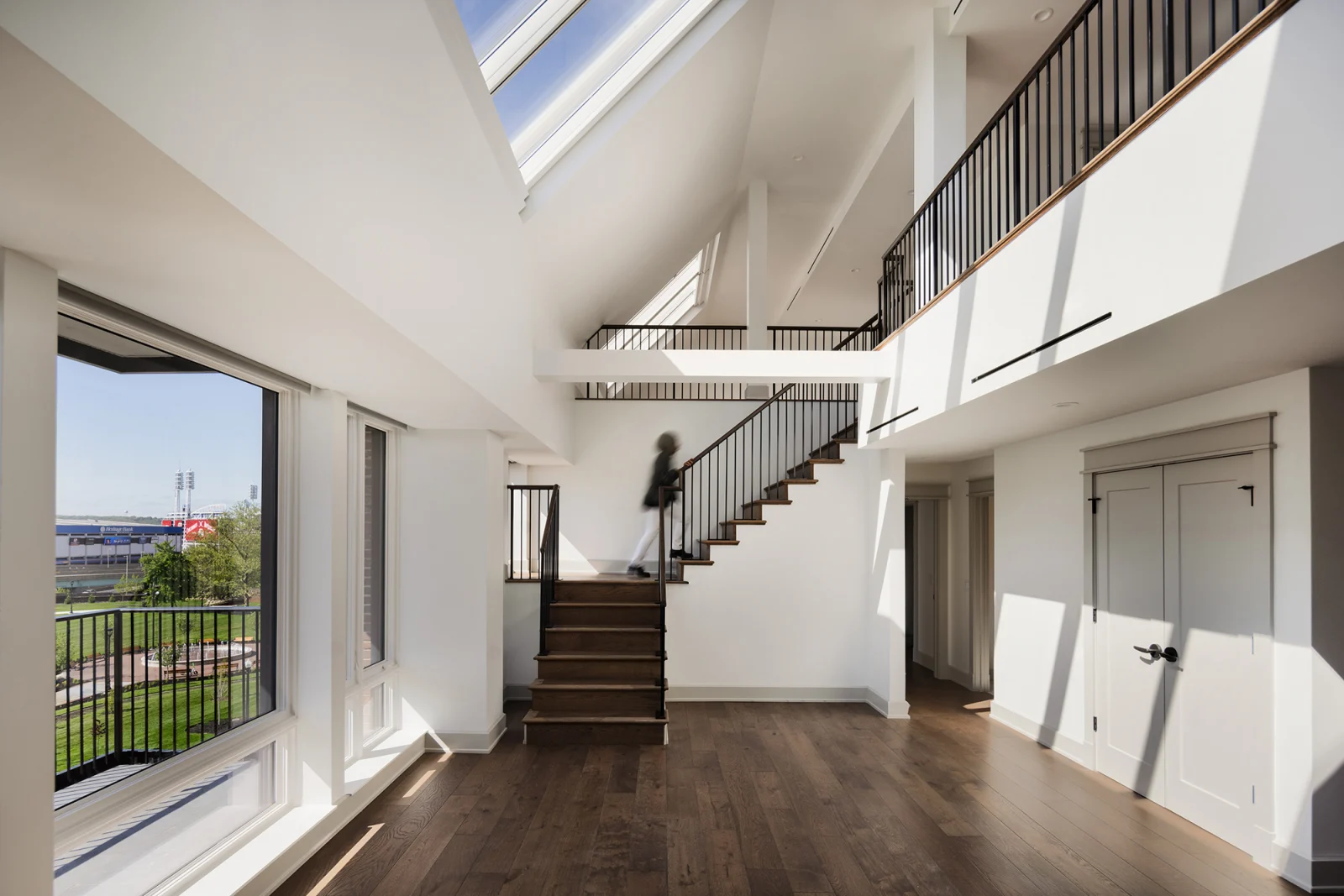
Using Light and Volume to Expand Perception
Square footage matters less when a space feels open.
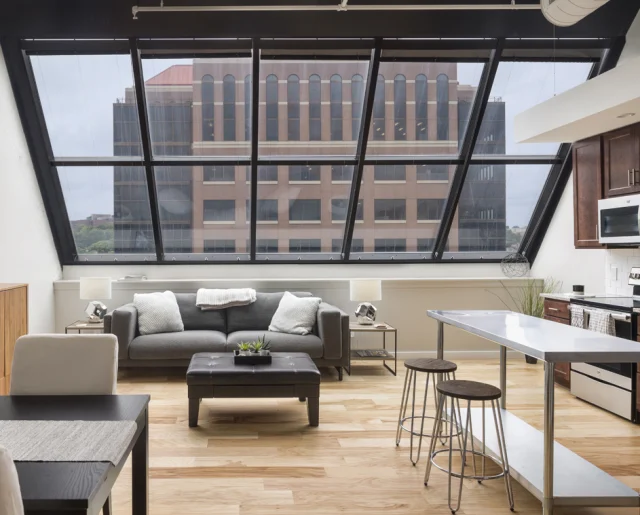
Larger windows, better daylighting, and strategic layouts can dramatically change how a unit is experienced. Even in smaller footprints, these moves create a sense of openness and luxury while helping residents feel more connected to their surroundings.
Hospitality Is Influencing Luxury Multifamily Design
Another defining characteristic of this trend is the blending of residential and hospitality design. Today’s luxury renters expect more than a well-designed unit. They are looking for services, amenities, and experiences that simplify daily life and create a stronger sense of convenience.
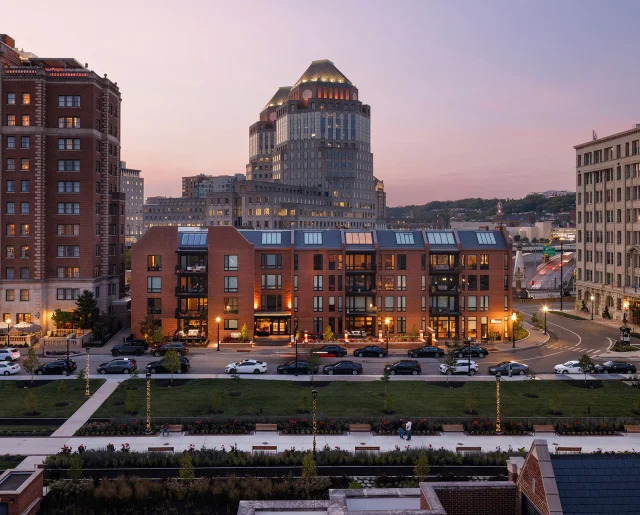
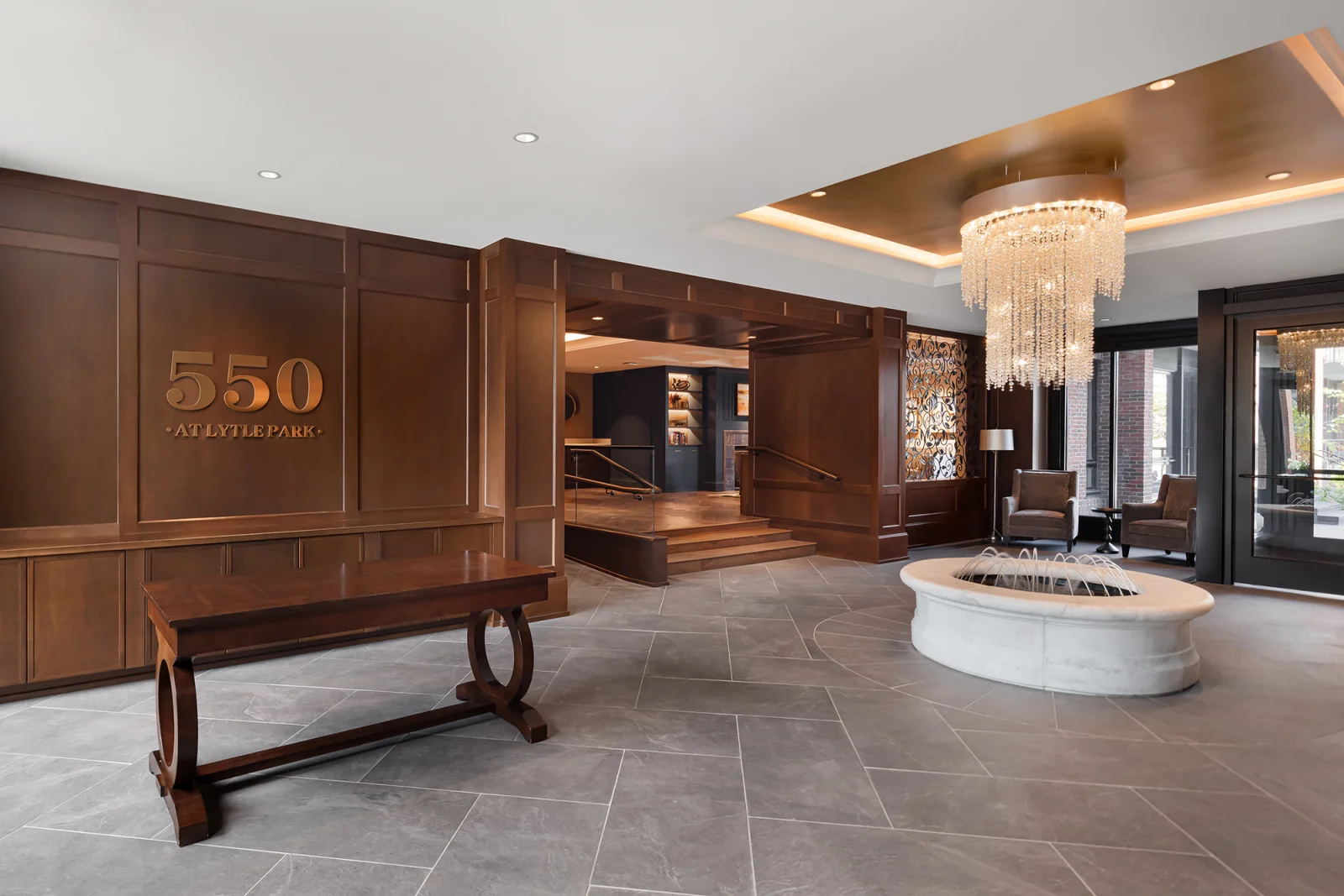
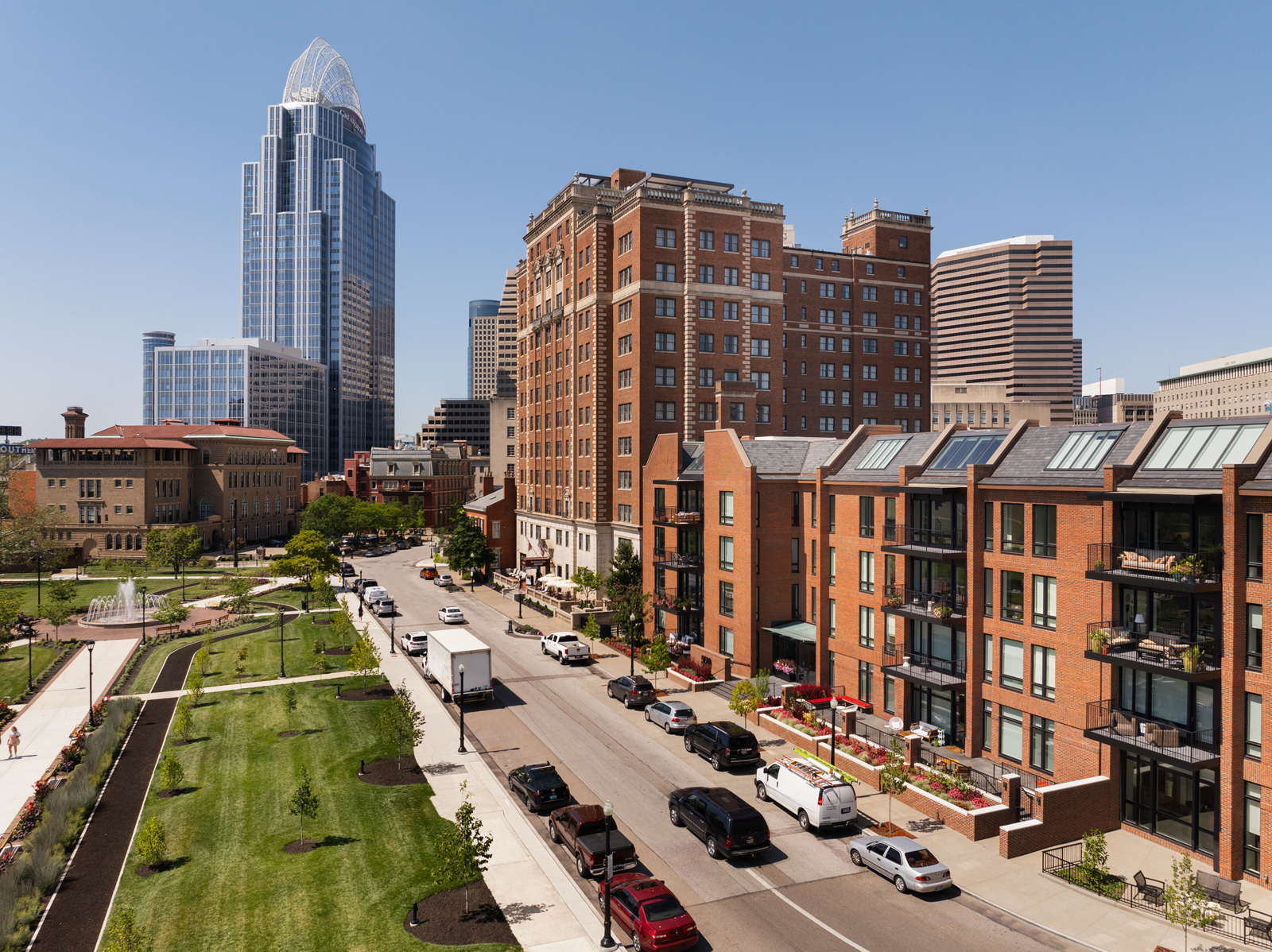
At 550 at Lytle Park in Cincinnati, residents have access to hospitality-inspired services through the adjacent hotel, including room service, housekeeping, and concierge offerings. This type of integration creates a living experience that feels closer to a boutique hotel than a traditional apartment building.
The most successful luxury multifamily projects are rarely the ones with the longest amenity list. Instead, they are the ones with amenities and services that feel intentionally tailored to the residents they are targeting.
That starts with understanding who the future resident is. A building designed for empty nesters, retirees, and seasonal residents will have very different priorities than one targeting young professionals. The goal isn’t to provide every possible amenity. It’s to create spaces and services that are programmed and residents genuinely use and value.
Examples of targeted, high-impact amenities include:
- Concierge-style leasing and service desks
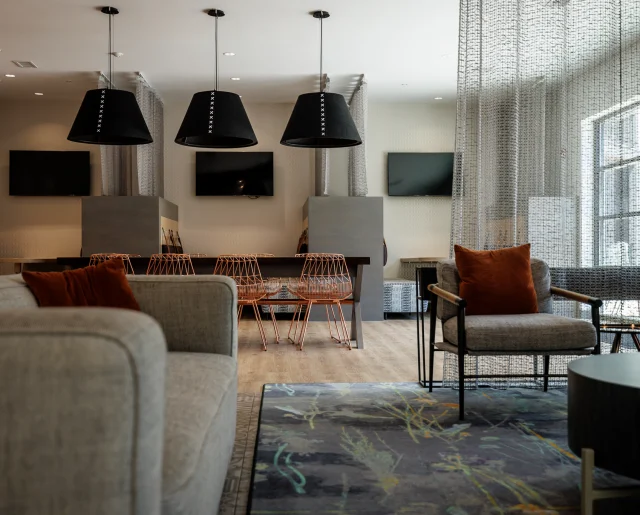
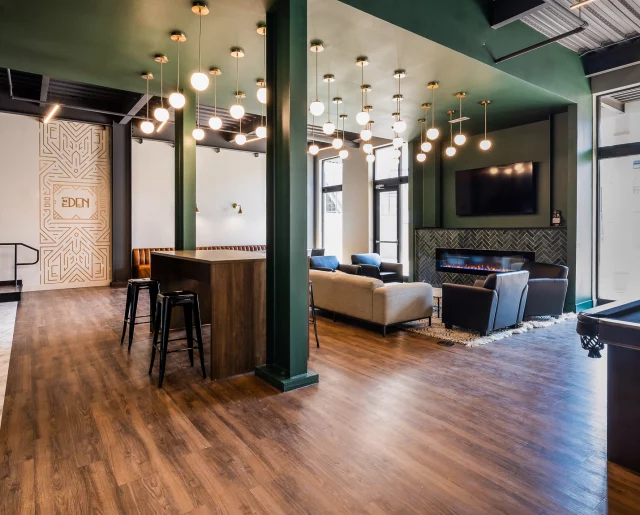
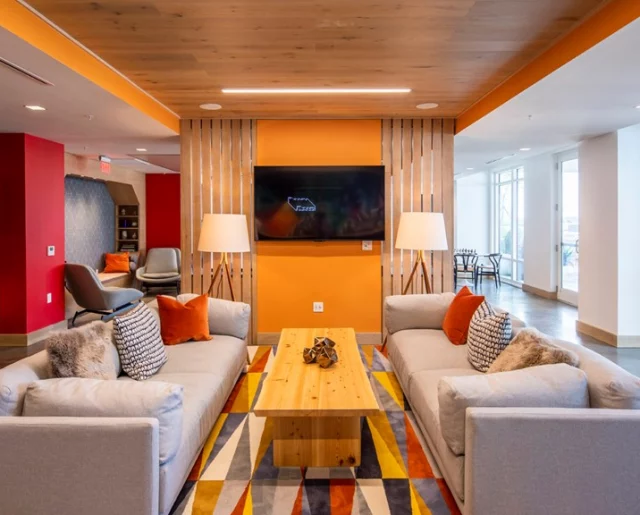
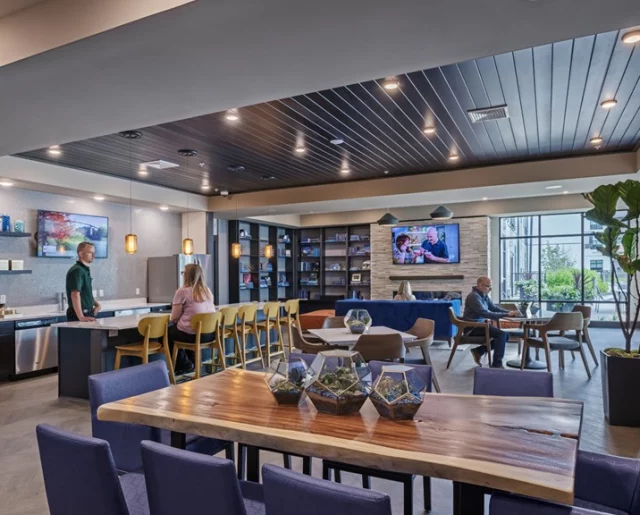
- Curated lounge spaces that feel more like boutique hotel lobbies
- Art-driven interiors that create a distinctive sense of place
- Flexible spaces that support part-time residents and extended stays
These aren’t simply amenities. They’re part of a broader living experience that helps differentiate a project in an increasingly competitive market.
The Importance of Early Collaboration with Property Management
One of the most overlooked aspects of successful luxury multifamily development is early collaboration with property management teams.
Property management professionals often have the clearest understanding of what residents value because they interact with them every day. They know which amenities are heavily used, which spaces sit empty, and which services become deciding factors during the leasing process. Their firsthand knowledge of resident preferences and operational needs can provide valuable insights long before construction begins.
Engaging property management early allows the design team to align physical spaces with real-world programming and operations. Their perspective can influence everything from amenity planning and staffing needs to storage requirements and resident services.
The result is a community that not only leases well, but continues to perform well over time. It leads to more effective amenity spaces, stronger resident satisfaction, and a better overall experience. In short, it helps bridge the gap between design intent and daily use.
Convenience is Part of the Luxury Experience
For this renter demographic, convenience is part of the value proposition. Residents who are downsizing from a home or condominium are often accustomed to a certain level of comfort, privacy, and predictability, and those expectations carry into the rental experience.
That means small planning decisions can have a major impact. Assigned parking, easy access from the garage or parking to residential units, secure package delivery, thoughtful entry sequences, and intuitive wayfinding all contribute to a smoother daily routine. Even the leasing environment matters. A desk that feels more like a concierge point than a traditional leasing office can help reinforce the elevated character of the community.
Individually, these details may seem simple. Together, they support the sense of ease that luxury renters are often seeking.
How We Help Developers Deliver
At MA Design, we’re actively working with developers across the Midwest who are responding to this growing demand for luxury multifamily housing.
Our approach starts with understanding the people a project is intended to attract. That means defining renter profiles, engaging property management teams early, and identifying the amenities, services, and experiences that will resonate most with future residents.
From there, we focus on translating those insights into design solutions. Whether it’s creating more efficient unit layouts, incorporating hospitality-inspired features, or developing amenity spaces that support a specific lifestyle, every decision should contribute to the overall resident experience while supporting the project’s financial goals.
The most successful luxury multifamily communities aren’t defined by a single amenity or finish package. They’re the result of a clear vision, thoughtful planning, and a deep understanding of what today’s renters value most.
The Opportunity Ahead
The demand for luxury apartments in the Midwest is not a passing trend—it’s a response to deeper lifestyle shifts.
For developers willing to be intentional, the opportunity is significant.
But success requires more than a premium price point. It requires a clear understanding of the renter, a thoughtful approach to design, and a willingness to rethink what multifamily living can be.